Is Kathmandu worth visiting for you?
Kathmandu is worth visiting if you care about temples, old cities and religion as people actually live it. It’s probably not worth a long stay if you came to Nepal for clean air, wide mountain views and quiet. Many people feel both things in the same day.
We sell tours here, so we have an interest in your answer. We’ve tried to set out the case against as plainly as the case for, with the numbers and sources behind each point. If the case against wins, spend your time in Nepal somewhere else. That’s a perfectly sensible choice.
What is the case for visiting?
The strongest argument is how much history sits in such a small area. You can see all seven zones in two days.
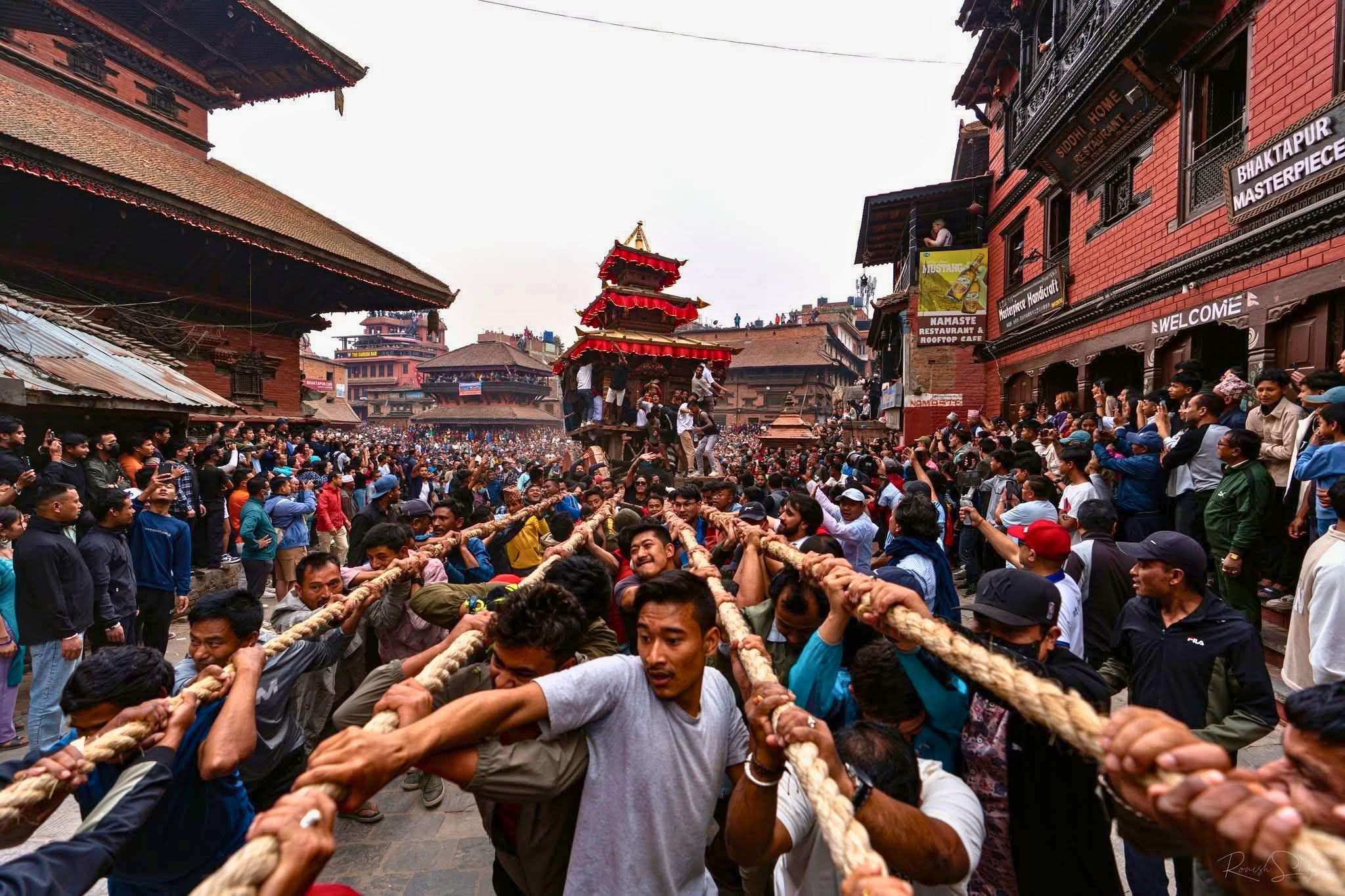
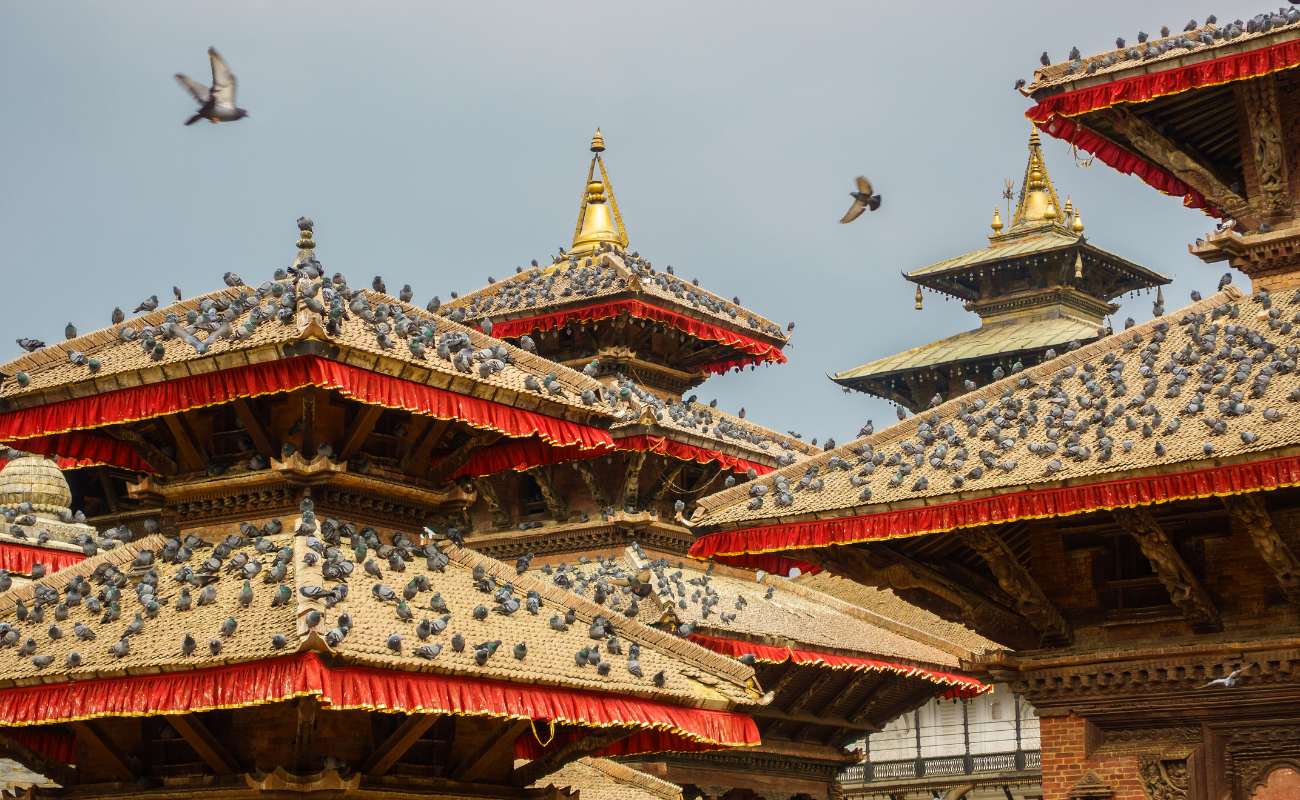
- Seven UNESCO zones close together: the Kathmandu Valley was inscribed in 1979 with seven monument zones. Bhaktapur, the furthest of the three old royal cities, is about 14 km from central Kathmandu, according to In Your Pocket.
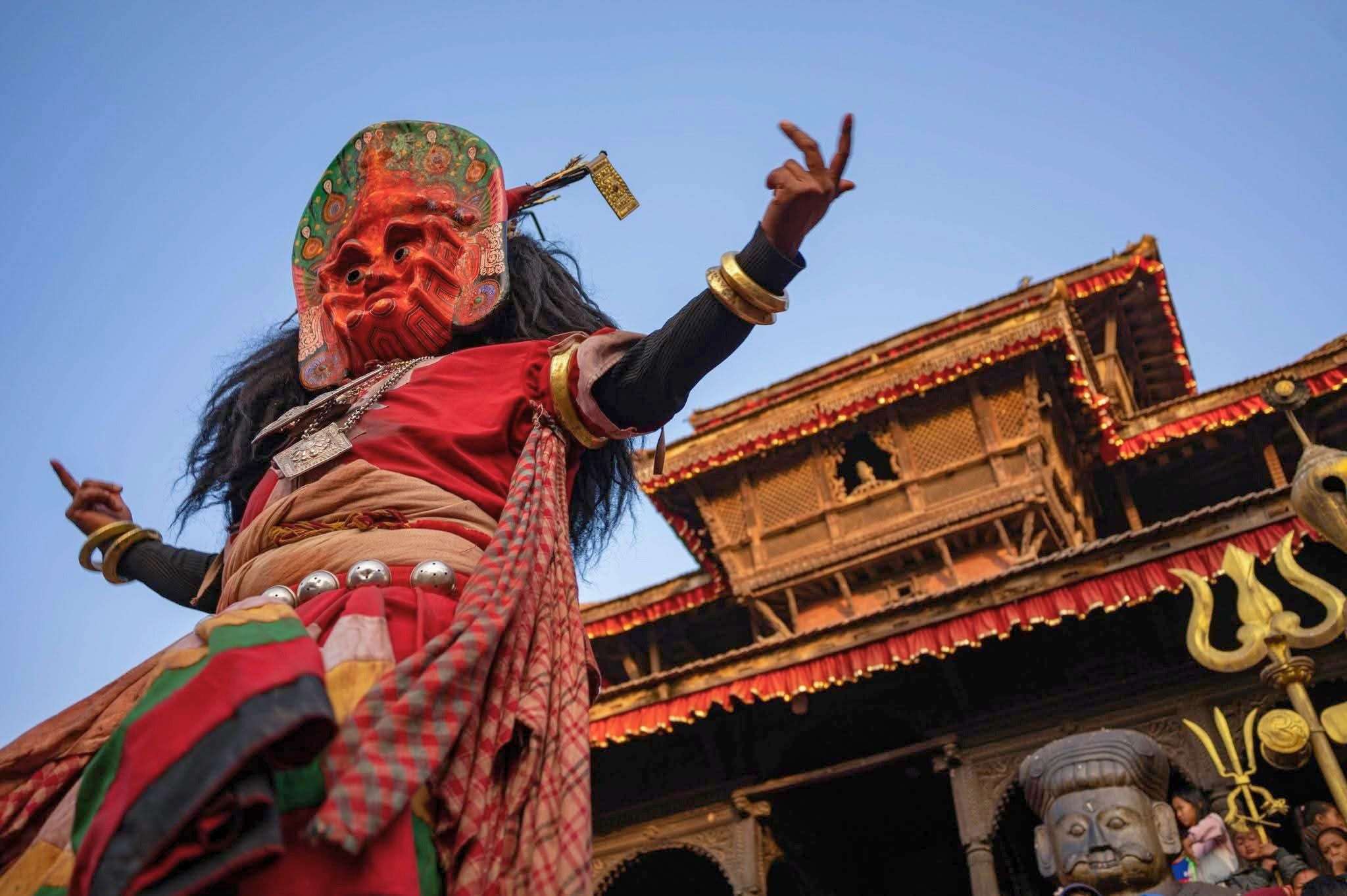
- Living religion: these aren’t ruins. Boudhanath is a working Buddhist centre, and Pashupatinath is an active Hindu temple on the Bagmati River. You’ll see people at prayer as part of their ordinary day, so please give them room.
- Low entry costs: all seven sites cost NPR 5,700 for foreign visitors, as listed by the Nepal Tourism Board in November 2026.
- Easy to do on your own: you can reach the main sites by taxi and buy tickets at the gate. You don’t need a guide unless you want one.
- A short stay works: two or three days covers the main sites, so you don’t have to give up much of your trip.

What is the case against visiting?
Air quality, traffic and crowds are the three honest reasons to cut your stay short or skip the city. We’ve put figures on each one below.
How bad is the air pollution?
Air pollution in Kathmandu is often unhealthy, especially from winter into spring. IQAir recorded a 2019 yearly average for fine particles (PM2.5) of 48 micrograms per cubic metre, with January at 102.7 and August at 11.8.
More recent figures show the same pattern. ICIMOD’s monitoring station at Khumaltar measured about 50 at its Khumaltar station from December 2025 to February 2026. In January 2026, the Kathmandu Post, using IQAir data, reported the valley as the third most polluted in the world at one point in the day, with a PM2.5 reading of 340 at Pulchowk. In March 2026 it reported Kathmandu as the world’s second most polluted city.
Spring adds smoke. A forest fire expert told the Kathmandu Post that the fire season peaks in April and May. The Himalayan Times reported in April 2025 that ICIMOD had found polluted air on 75 of the past 90 days, and that the health ministry advised people to stay indoors and wear masks.
The World Health Organization’s 24-hour guideline is 15 micrograms per cubic metre. If you have asthma, a heart condition or a lung condition, talk to your doctor and pick your dates carefully. The monsoon months have far cleaner air. We can’t give you medical advice.
How bad is the traffic?
Traffic is slow, and it will shape your day. In Your Pocket puts rush hour at about 8 am to 10 am and 4 pm to 7 pm, and says travel times can roughly double. It warns that leaving for Bhaktapur after 3 pm can turn an afternoon visit into an evening one.
The roads are also hard on pedestrians. Wikivoyage says walking “is not always pleasant”, and advises keeping to the edge of the road and checking for two-wheelers before crossing. The UK Foreign Office says road accidents are a major cause of death and disability in Nepal, and advises against overloaded buses and night travel.
How bad are the crowds?
Crowds peak in October and March, when national arrivals pass 120,000 a month. Nepal had 128,443 arrivals in October 2025, according to The Himalayan Times, and more than 132,000 in October 2026, according to Kantipur. These are national figures, as we couldn’t find any for the city alone.
We have no measured figures on crowding at individual sites. Early starts are the usual advice. If crowds worry you, consider late November or February, but check the air quality notes first.
What about the earthquake damage?
Reconstruction after the 2015 earthquake is largely done, but not finished. The Department of Archaeology told The Rising Nepal in August 2026 that 825 of 920 damaged heritage sites nationally had been rebuilt. The same report quotes a heritage activist raising concerns about materials used in repairs at Kumari Ghar.
So you’ll see some new timber and brick, and occasional scaffolding. Our Kathmandu earthquake restoration page tracks this. The valley was on UNESCO’s Danger List from 2003 to 2007.

What about safety and political unrest?
Kathmandu had serious unrest in September 2025, and the wider risk of protests is real. The Himalayan Times linked a fall in arrivals to 78,711 that month to the Gen Z protests. The UK Foreign Office says protests can start at short notice and may turn violent, and it advises staying away from them.
Earth tremors are common across Nepal, and the same advice warns that poor emergency resources could worsen the effect of an earthquake. Read our guide to is Kathmandu safe and your own government’s advice before you book.
Who should skip it or keep it short?
Here’s our honest view of who should stay and who shouldn’t, based on the points above.
| You are | Our advice |
|---|---|
| Interested in temples, art and history | Stay 2 to 3 days, or more if you love architecture |
| A trekker with a day or two | See one or two sites, then rest |
| Visiting mainly for mountain views | Keep it short, and spend your time in the hills |
| Sensitive to bad air | Avoid December to May if you can, and talk to your doctor |
| Unhappy in loud, crowded cities | Stay in Patan or Bhaktapur, or keep it to a day |
| On a tight schedule with one day | Worth it if you land in the morning |

How can you make the visit easier?
A few simple choices remove most of the problems above. None of them cost much.
- Pick your month: see the best time to visit Kathmandu. October and November have the best weather, and the monsoon has the cleanest air.
- Go early: being on the road by 8 am keeps you ahead of the worst traffic.
- Sleep away from main roads: this one is our own suggestion, and a quieter area can make the evenings much easier.
- Get out of the city: Dhulikhel’s readings were well below the city’s in one 2018 study, at a median of about 55 micrograms against 131 at Ratnapark. Those were winter readings, and neither is clean.
- Cut the stops: one good old city is better than four rushed sites. Read how many days in Kathmandu if you’re unsure.
Do you need a tour to enjoy it?
No. Plenty of people enjoy Kathmandu on their own. Our guide on do you need a tour guide in Nepal explains when a guide helps and when it doesn’t.
A car and guide take away the traffic planning and explain what you’re looking at. If that appeals, 7 UNESCO Sites in 2 Days covers everything at an easier pace. If you’d rather skip the busiest part of the city, the Kathmandu Valley Day Tour: Patan and Bhaktapur spends the day in the two old royal cities instead.