Which Kathmandu tours suit seniors?
The best choices are short days with few stairs and time to sit down. These matches are our suggestions, from each tour’s length and pace.
| Tour | Length | Why it suits, or doesn’t |
|---|---|---|
| 7 UNESCO sites in 2 days | 6 to 7 hours a day | Our first choice if you have two days |
| Half day tour | 4 hours | Unhurried, and the road reaches Swayambhunath |
| Pashupatinath and Boudhanath at dusk | 4 to 5 hours | One operator warns of some steps and a lot of standing on a similar day |
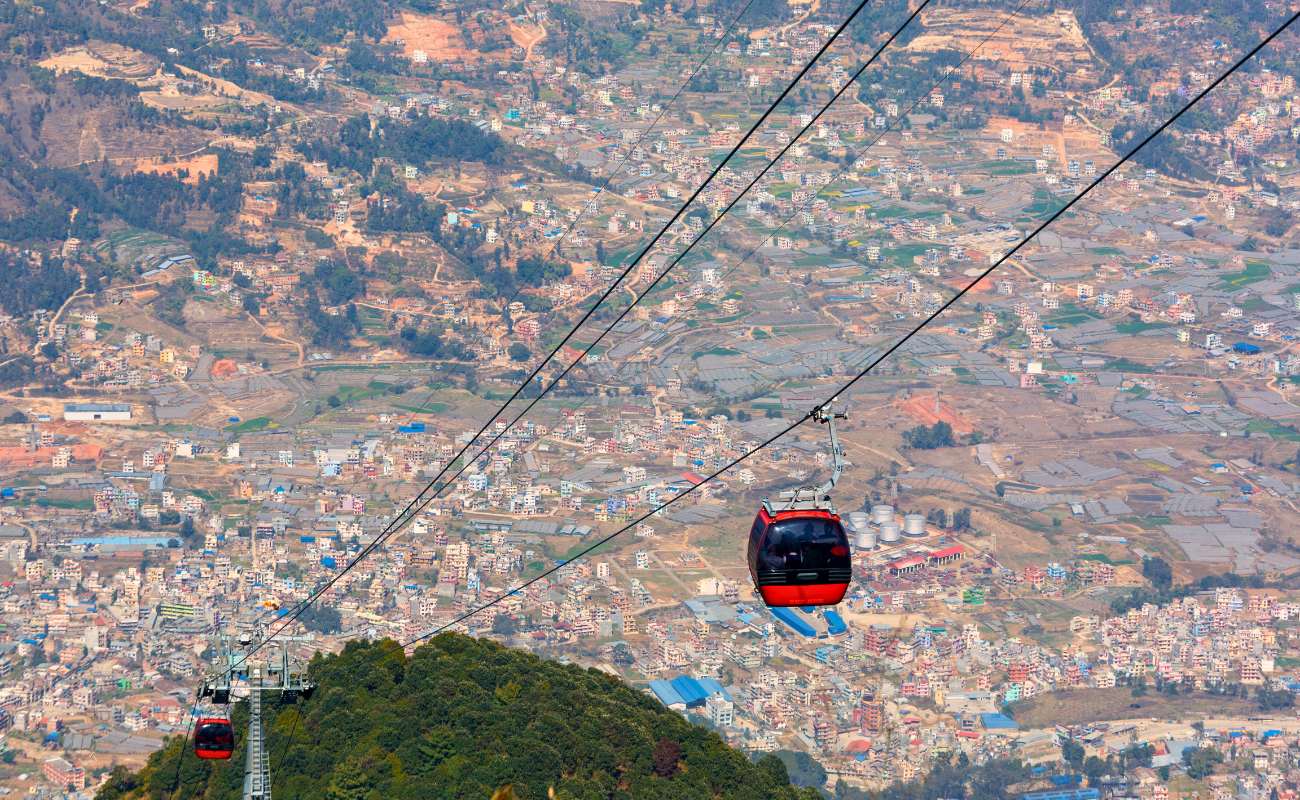
| Chandragiri cable car and Swayambhunath | 5 to 6 hours | Listed as easy, but the top is 2,551 m |
| 7 sites in one day | 9 to 11 hours | Skip it: seven stops and a fast pace |
| Nagarkot hike to Changu Narayan | 8 to 9 hours | Skip it unless you’re a fit walker: it’s our most active day |
A private tour is the simple pick here, though it costs more. It’s only your party, with hotel pick-up included. You choose the start time, and you can change the pace on the day, or on most tours swap a stop. A group tour costs less per person, but it has a fixed start time and schedule, and you meet in Thamel unless you pay for hotel pick-up. Hotel pick-up is included on the three sunrise tours.
How much walking and how many steps are at each site?
Published step counts are rare, and most access details come from operators who sell accessible tours. Treat this table as a starting point. We haven’t measured these sites ourselves.
| Site | What sources say |
|---|---|
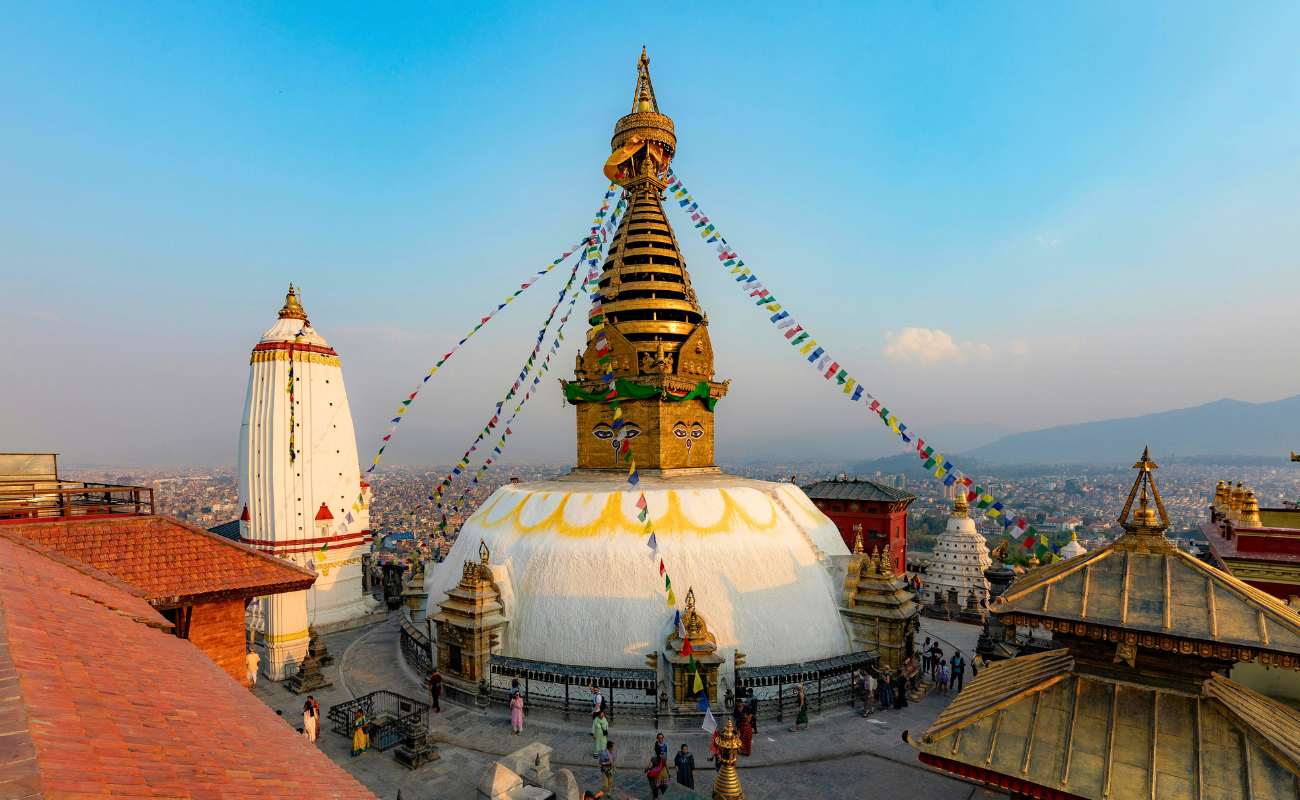
| Swayambhunath | Stairway counts vary from 318 to 424 (ECS Nepal). One operator says a road reaches the top and the steps are optional. Onlinekhabar says it doesn’t welcome wheelchair users |
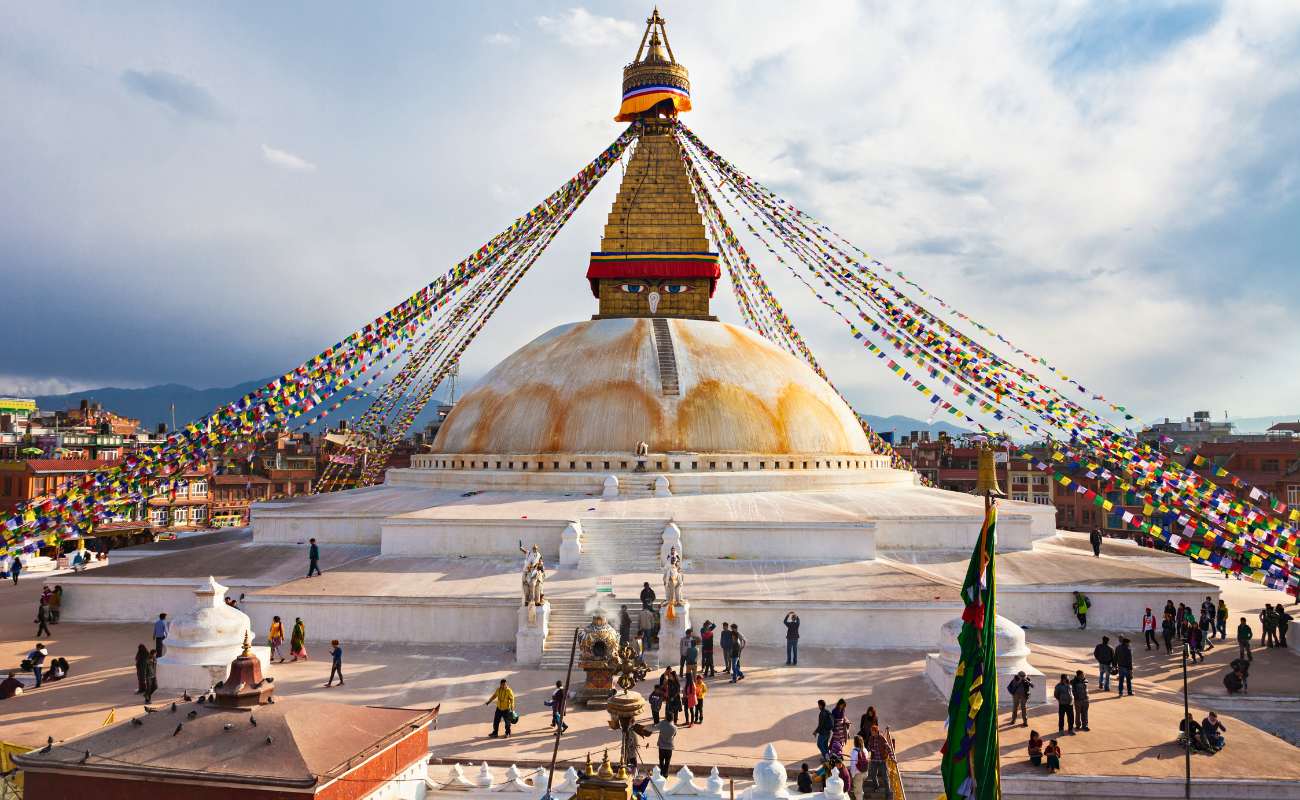
| Boudhanath | A flat, circular path around the stupa (Alpha Adventure Treks, HI DMC, Boundless Adventure) |
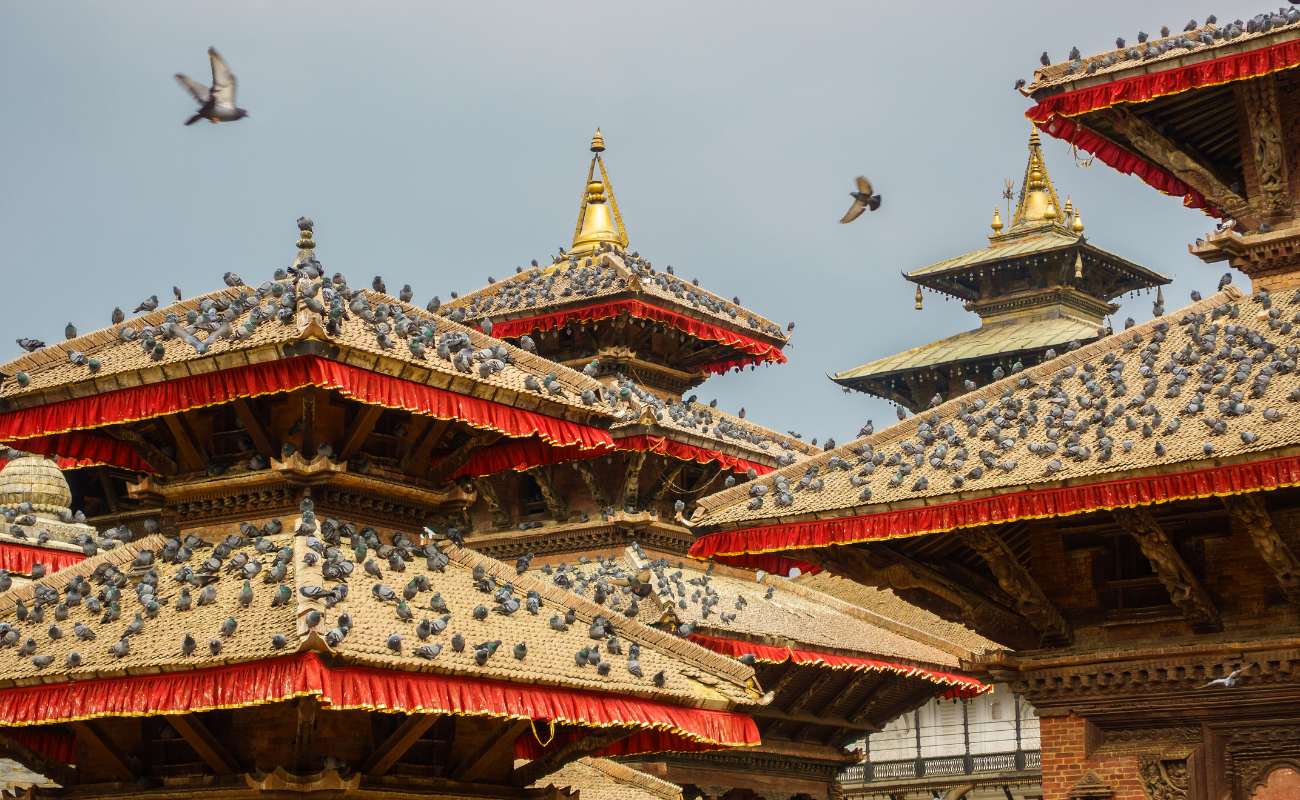
| Kathmandu Durbar Square | Vehicles reach the entrance gate and paths are flat, says Boundless Adventure. Onlinekhabar also lists it as accessible |
| Patan Durbar Square | “Improved paving and ramp access” (Alpha Adventure Treks). Lanes around it are uneven on the Bungamati and Khokana route (The Everest Holiday) |
| Bhaktapur Durbar Square | Central area free of cars (Rough Guides). Cobbled paths, described as smooth by Boundless Adventure, while The Everest Holiday lists cobbles among the real limits |
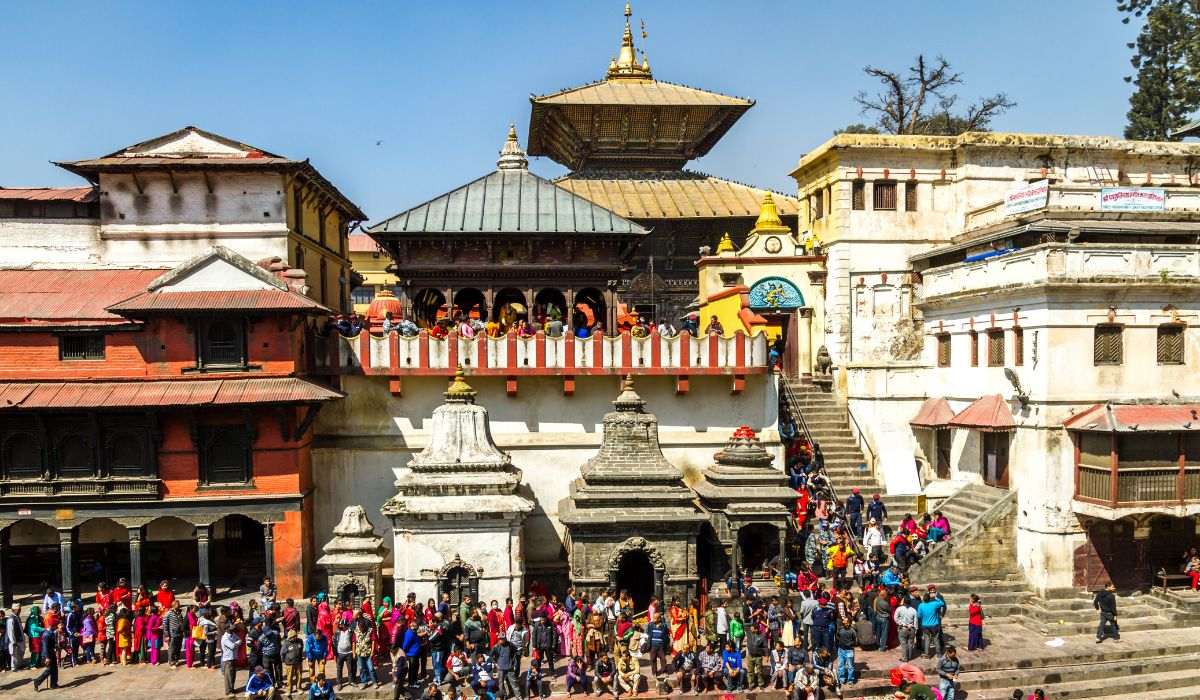
| Pashupatinath | Sources differ. Alpha says the outer premises have wheelchair-friendly paths, Boundless says it’s only partly accessible, and Onlinekhabar says it doesn’t welcome wheelchair users |
| Changu Narayan | A hilltop temple. We found no reliable detail on its steps or slope |
| Chandragiri | The operator says the cable car is wheelchair friendly and staff help with boarding |
Footpaths in the city are often a bigger problem than the sites. In a 2024 Kathmandu Post report, a wheelchair user described crossroads slopes that wheelchairs can’t climb. A city spokesperson said Kathmandu wasn’t yet able to address all types of disability. See the guide to steps and mobility at the sites for more.
Does altitude matter at 1,400 m?
Kathmandu’s height shouldn’t cause altitude illness for most people. Sources put the city at about 1,400 m, though Wikipedia gives both 1,324 m and 1,400 m in the same article. The US CDC’s Yellow Book says travellers sleeping at 2,450 m or above are at risk, and sometimes those lower.
Age alone isn’t the concern. The Yellow Book lists elderly travellers as likely having no extra risk. Heart and lung conditions are different. It says stable angina, moderate COPD and compensated heart failure need caution, and it says to consult a physician who knows high-altitude medicine.
| Place | Height |
|---|---|
| Kathmandu | About 1,400 m |
| Nagarkot ridge | About 2,175 m, according to one operator |
| Chandragiri, bottom station | 1,550 m |
| Chandragiri, top station | 2,551 m |
Chandragiri is the one to think about, because you rise about 1,000 m in about 10 minutes. You don’t sleep there, which matters. CIWEC, a Kathmandu travel hospital, says symptoms can begin at 2,400 m or lower, while serious illness is rare below 3,000 m. If you have a heart or lung condition, ask your doctor before choosing this tour. If you feel unwell at the top, come down.
How should you pace a day in Kathmandu?
Plan one main stop in the morning and one after a break. That’s our suggestion, as we found no official guidance on pacing.
Four things make a real difference:
- Start time: on a private tour, ask for a later start if you don’t want to rush. Group tours leave at a fixed time. Nagarkot sunrise tours start before dawn, so skip them if early mornings are hard.
- Standing: one operator warns of a lot of standing at Pashupatinath and Boudhanath. Tell us if you can’t stand for long.
- Evenings: low light makes uneven ground harder. On a dusk tour, wear shoes with good grip and carry a small torch.
- Medicines: carry enough for the whole trip, and keep them in your day bag.
Where can you sit down?
We could confirm only a few places to sit, so don’t assume benches at the squares. We found no reliable source on public seating at the seven sites, and we’ve left that out.
These are the ones we could source:
- Patan Museum Café: Nepali Times described shaded pavilions and dining nooks inside the museum complex in 2019. It’s a useful stop, but that report is old, so check it’s open.
- Boudhanath: HI DMC mentions several rooftop cafés that overlook the stupa. Rooftop usually means stairs, so ask before you climb.
- Garden of Dreams: a garden in central Kathmandu, open 9 am to 9 pm daily according to its official site. The Nepal Tourism Board lists entry at NPR 400 for foreign visitors in November 2026.
What should older travellers skip?
Skip whatever costs you most effort for the least return. For many people, that’s these three things:
- The Swayambhunath stairway. Take the road. You still reach the stupa at the top.
- Viewpoints on hazy days. Mountain views at Nagarkot and Chandragiri are never guaranteed.
- Seven sites in a day. The two-day version covers the same places with far less rush.
Pashupatinath’s main temple is for Hindus only. Non-Hindu visitors use the grounds and can watch from across the Bagmati River. Wego’s guide says to allow extra time for security and walking at the evening aarti (the lamp ceremony), and to expect a short walk from where vehicles stop.
When is the air easiest on your lungs?
Air quality can be a real issue in Kathmandu, especially for people with breathing problems. On 10 March 2026, IQAir recorded an index of 206, which is rated very unhealthy. The Health Ministry urged children, seniors and people with asthma or chronic cough to take special care.
The ministry advised avoiding outdoor activity in the morning and evening, and wearing a mask outside. Check a live reading before each day out. On a private tour, you can ask to change the pace or swap a site. The UK government also lists air pollution as a health risk in Nepal.
When you ask about a tour, tell us your walking limits, whether stairs are a problem, and how long you can stand. We’ll reply with a price and a start time.