What is Swayambhunath?
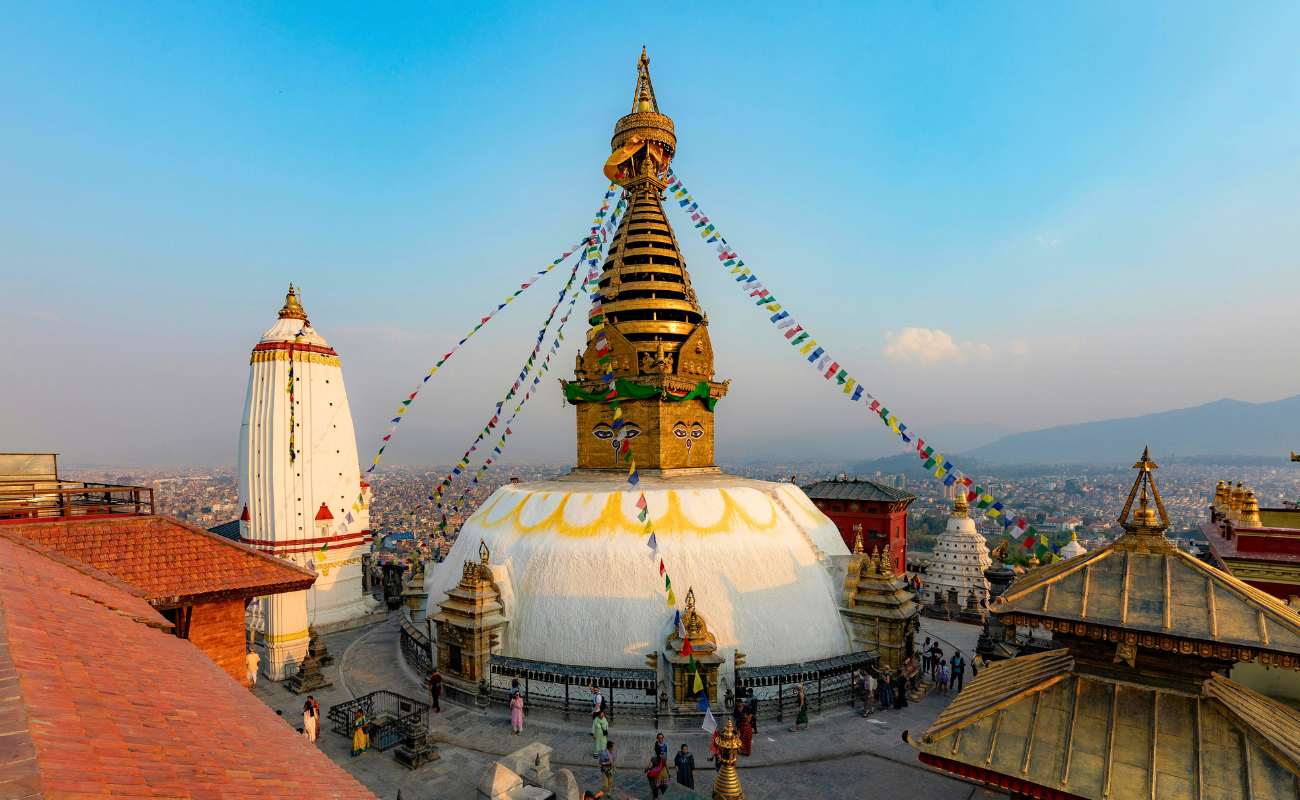
Swayambhunath is a Buddhist stupa and temple complex on a hilltop on the western edge of Kathmandu. The name means “self-existent one”, according to the Nepal Tourism Board. Hindus and Buddhists both come here, and devotees walk around the stupa all day.
It’s one of the seven monument zones of the Kathmandu Valley World Heritage property, inscribed in 1979. For the Newar people, it’s among the three most sacred Buddhist pilgrimage sites, according to Wikipedia.
Where is it, and how far is it from Thamel?
The hill sits about 3 km west of Thamel, according to The Longest Way Home. The Nepal Tourism Board gives 2 to 3 km from the city centre, and our own map measurement gives 2.0 km in a straight line from Thamel.

What is the history of Swayambhunath?
Tradition dates the stupa to about 460 AD and credits King Manadeva, according to the Nepal Tourism Board. The board’s other page says the earliest written reference is from the 5th century, though the site may be older.
The founding legend comes from the Swayambhu Purana. In it, the valley was a lake, and a lotus grew there that gave off light. The figure Manjushri cut the mountains with his sword and drained the water, and the stupa later rose over the light.
| Date | What happened |
|---|---|
| 3rd century BC | Tradition says Emperor Ashoka visited. We found no record to confirm it |
| About 400 AD | The chronicle Gopalarajavamsavali says King Vrsadeva, great-grandfather of Manadeva, carried out rebuilding here |
| About 460 AD | Stupa traditionally credited to King Manadeva |
| 13th century | The stupa is an important Buddhist centre |
| 1346 | Sultan Shamshuddin’s invasion damages the dome |
| 15th century | Sariputra, abbot of Bodh Gaya, leads rebuilding with a Malla king’s help |
| 1504 | Tibetan master Tsangnyon Heruka finishes a renovation in three months |
| 17th century | King Pratap Malla builds the Pratappur and Anantapur temples and, according to Wikipedia, an eastern stairway. ECS Nepal says today’s stone stairway was commissioned by Tirthraj Manandhar in 1912 |
| 1921 | The last major renovation before 2008 |
| 2008 to 2010 | Renovation funded from California, with 20 kg of gold for regilding |
The name “Monkey Temple” has been used by visitors since the 1970s, according to the board. The Longest Way Home says it’s now discouraged, so use Swayambhu if you can.
What is there to see on the hilltop?
The hilltop packs many shrines into a small space. These are the named sights.
- The great stupa: A white dome with five meditating Buddhas around it. A cube above the dome carries the painted eyes of the Buddha, looking in four directions. Thirteen gilded rings rise above that.
- Great vajra: A large gold-plated thunderbolt on a mandala base, at the top of the eastern stairway. It’s the first thing you see.
- Pratappur and Anantapur: Two temples built by Pratap Malla. Pratappur is named after the king, and Anantapur remembers Queen Anantapriya, according to Khabarhub.
- Hariti Temple (Ajima): A temple to the goddess of children. According to tradition, she was an ogress who became a protector of children. The Longest Way Home says photos of the shrine front aren’t allowed.
- Buddha image: A black stone image in a red brick alcove, past the small chaityas behind Hariti. The Longest Way Home names it as both Shakyamuni and Dipankara, so ask locally.
- Manjushree shrine: Behind the hilltop, dedicated to Manjushri or Saraswati, goddess of learning. Students pray here during Basanta Panchami.
- Shantipur: A plain white building to the north, away from the usual route. It holds what the Kathmandu Post calls the longest known narrative Buddhist painting, about 170 to 180 m long. Only certain priests and the Thakali community may enter.
- Swayambhu Buddhist Museum: A small red brick building with a few Buddhist statues and objects.
- Dewa Dharma Monastery: Known for a bronze Buddha image and Tibetan paintings, according to the Nepal Tourism Board.
- Karmaraj Mahabihar: A Kagyu monastery nearby.
- World Peace Pond: Down steps from Shantipur, near smaller stupas and a bell.
Close to the Ring Road, on the western edge, the board lists the largest image of Sakyamuni Buddha in Nepal, on a high pedestal.

How many steps are there, and is there a road?
The eastern stairway has between 318 and 424 steps, depending on who counted. The number 365 is the one you’ll read most often, but ECS Nepal’s 2018 article says it has no solid basis.
| Count | Who says |
|---|---|
| 318 | Several books and articles, per ECS Nepal |
| 326 | Baikuntha Manandhar, counted about 2003 |
| 360 | Reported by ECS Nepal |
| 365 | The Longest Way Home, and many guides |
| 424 | ECS Nepal’s report after post-earthquake repairs in 2018 |
You don’t have to climb them. The road circles the hill to a parking area on the west side, then you walk a short way to the top. Wikipedia also mentions a less-used stairway on that side of the hill.
What did the 2015 earthquake do here?
The main stupa survived the April 2015 earthquake, according to The Longest Way Home, but buildings around it were hurt. Anantapur was destroyed, the monastery at the back was badly damaged, and the Shantipur murals had to be moved.
Repairs have come in stages:
- November 2018: The Swayambhu management committee said it had finished 19 monuments, for about Rs 50 million. These included the Basupur shrine and the Bahumangaldwar Chaitya.
- Shantipur: Work on the building was delayed by a shortage of skilled workers in 2018. The murals were removed for safety, and the Post reported a debate over where they’d end up.
- March 2025: Khabarhub reported that the Pratappur and Anantapur temples had been restored again, because of erosion and structural risk, for about Rs 2 million.
- Still under study: The same report said other structures around the stupa were being assessed.
The Longest Way Home calls the site “fully restored”, but the 2025 report shows work continuing, so we don’t use that phrase. Nationally, 825 of 920 damaged monuments had been rebuilt by August 2026, according to the Department of Archaeology.

How long do you need?
Allow at least 1 hour. The Longest Way Home says a guided visit normally takes about an hour, and one published seven-site tour gives 45 minutes. Add time if you climb the stairs or want to see the quieter shrines.
What is a good walking route?
This route follows the order suggested by The Longest Way Home, starting from the eastern stairway.
- Climb the eastern stairway and pass the small earth shrine on the left.
- Buy your ticket at the top, and stop at the great vajra.
- Walk clockwise around the stupa.
- Visit the Hariti Temple at the back.
- See the Buddha image past the chaityas.
- See the Pratappur Temple.
- Walk north to see Shantipur from outside, then go down to the World Peace Pond.
- Leave by the side entrance.
If you come by road, start with step 3 and finish at the vajra.

What is the best time of day to visit?
Early morning or late afternoon is best, according to The Longest Way Home, for better light and fewer people. We found no official opening hours, so we don’t list any.
The biggest crowds come on Buddha’s birthday, usually in May, according to the Nepal Tourism Board.
What are the rules for dress and behaviour?
Walk clockwise around the stupa, and dress modestly. See what to wear in Kathmandu for general advice.
- Don’t photograph the front of the Hariti shrine.
- Ask before you photograph people at prayer.
- Keep food and shiny things hidden from the monkeys, which are rhesus macaques.
- Don’t feed them.

Is Swayambhunath accessible?
The road helps, but this is one of the harder sites for limited mobility. An Onlinekhabar article of November 2025, by a tour operator, says Pashupatinath and Swayambhunath “really do not welcome wheelchair users”.
The road removes the main climb, and we have no measurement of what’s left between the car park and the stupa platform. Ask us before you book. Our steps and mobility guide compares all the sites.
Which festivals happen here?
Buddha Jayanti, the birthday of the Buddha, brings the largest crowds, according to the Nepal Tourism Board. It usually falls in May. See our Buddha Jayanti guide for the date.
Students pray at the Manjushree shrine during Basanta Panchami.

How do you get there?
A taxi from Thamel is the usual way, and it takes about 10 to 15 minutes outside rush hour, according to The Longest Way Home. Our Kathmandu taxi fare guide covers prices.
- On foot: The Nepal Tourism Board says about 40 minutes from the centre. The Longest Way Home says 60 to 90 minutes.
- Bus or tempo: To the foot of the hill, then climb.
- Vehicle: To the west side, then walk a short way.
The two ticket offices are at the top of the stairs and by the parking area.
What is near Swayambhunath?
The Natural History Museum is just outside the side entrance, and Buddha Park is further along the road. Adding them makes a half-day visit, according to The Longest Way Home.
Kathmandu Durbar Square is about 2 km in a straight line to the east. It’s the natural next stop, and our Kathmandu half day tour pairs the two. Boudhanath is the other great stupa of the valley. If you’re choosing between them, read boudhanath stupa vs swayambhunath.
How do you visit with a guide or alone?
You can visit alone with no booking. Buy a ticket at either office, pay in Nepali rupees, and walk clockwise. Going up by the stairs and coming down by the road needs some planning for a vehicle, so decide this before you set off.
A guide helps you find the quieter shrines and explains the history on the way. For the wider question, see do you need a tour guide in Nepal.
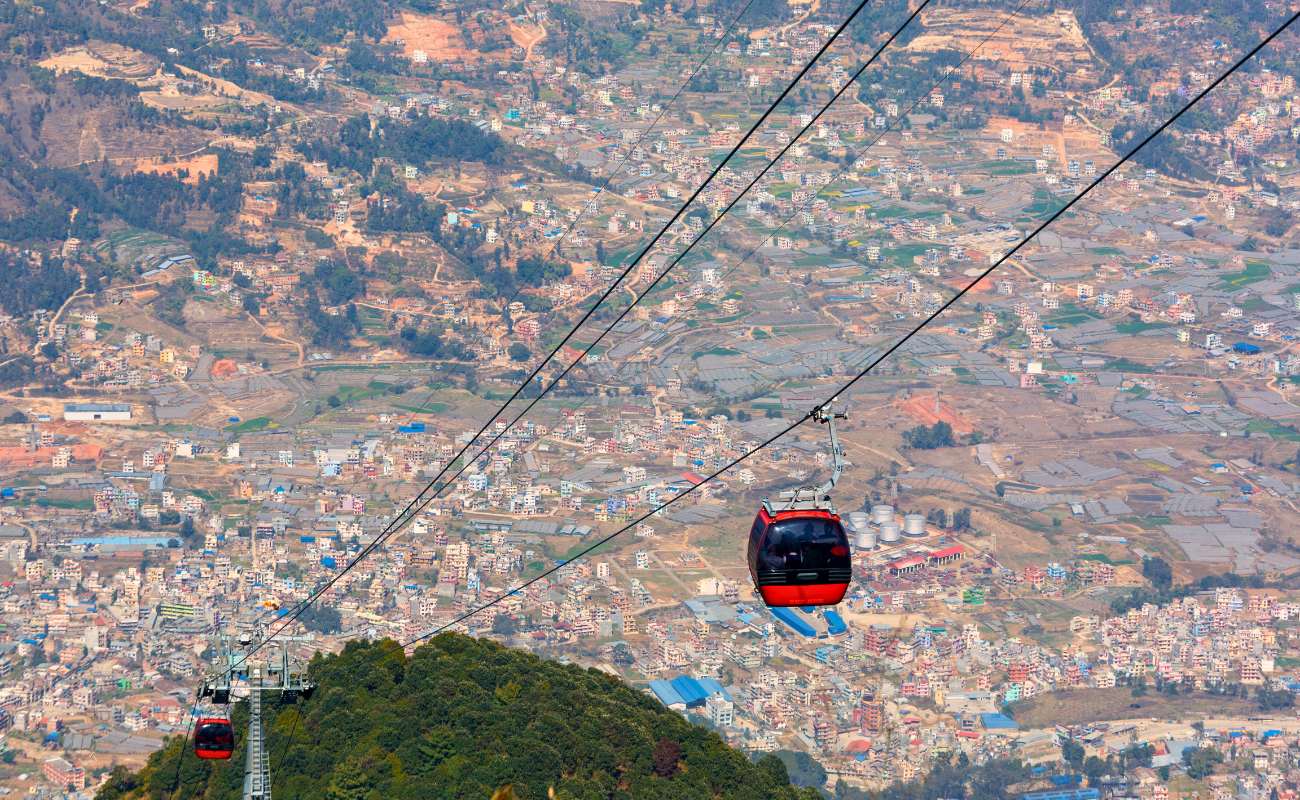
Four tours on this page include the hill, among them our Chandragiri cable car tour.