What is Pashupatinath Temple in Kathmandu?
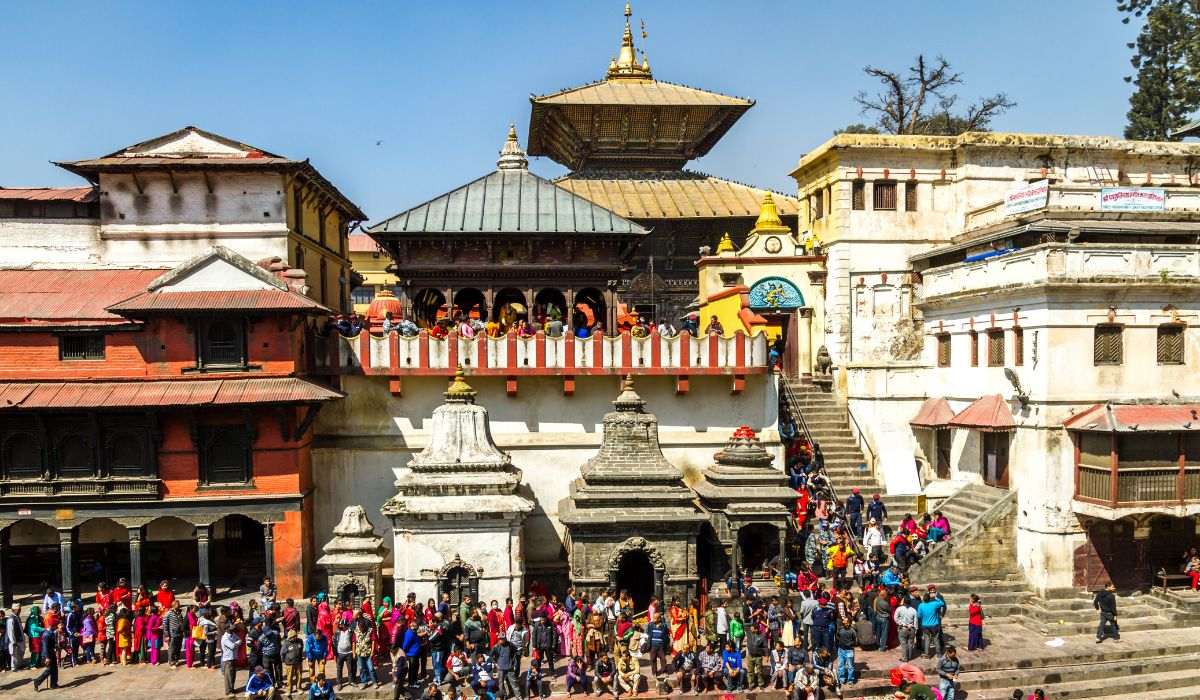
Pashupatinath Temple is a Hindu temple complex dedicated to Shiva, on the banks of the Bagmati River in eastern Kathmandu. The Nepal Tourism Board describes it as the most revered Hindu temple in Nepal. It’s one of the seven monument zones of the Kathmandu Valley World Heritage property, inscribed in 1979.
It’s a working place of worship, and a place where families bring their dead. Please visit with that in mind.
Where is it, and how far is it from Thamel?
The temple stands at Gaushala, about 5 km east of the city centre, according to the Nepal Tourism Board. The temple trust’s site says a taxi from Thamel takes about 15 minutes, and our own map measurement gives 3.8 km in a straight line.

Who can go inside the main temple?
Only Hindus can enter the main temple. The Pashupati Area Development Trust (PADT) says non-Hindu visitors aren’t permitted inside the main sanctum. The Nepal Tourism Board says non-Hindus can view it from the terraces across the Bagmati, to the east.
Non-Hindu visitors can use the grounds, the ghats (stone steps down to the river) and the surrounding shrines. They can also watch the evening aarti (the lamp ceremony) from across the river.
For exact rules on who counts, and what to expect at the gate, read our Pashupatinath non Hindu rules. Ask the staff if you’re unsure.
What is the history of Pashupatinath?
The temple’s existence is recorded as early as 400 AD, according to Wikipedia, but the chronicles disagree on who built it. The Nepal Tourism Board says the main pagoda is believed to be about three centuries old.
| Date | What happened |
|---|---|
| About 400 AD | Earliest recorded existence of the temple |
| Licchavi period | The Gopal Raj Vamshavali credits King Prachanda Deva. Another chronicle credits Supuspa Deva with a five-storey temple |
| 1099 to 1126 | King Shivadeva rebuilds it |
| Later medieval period | Ananta Malla adds a roof |
| 1692 | Renovated into its current form, after termites and earthquakes damaged earlier structures |

What is there to see at Pashupatinath?
The main temple and the wider area are separate things to plan for. Non-Hindu visitors see the main temple only from outside.
- The main temple: Wikipedia describes a two-roofed pagoda about 24 m tall, with copper roofs covered in gold and four doors covered in silver, and a stone lingam inside with faces in four directions. Non-Hindus don’t enter, so they don’t see the inside.
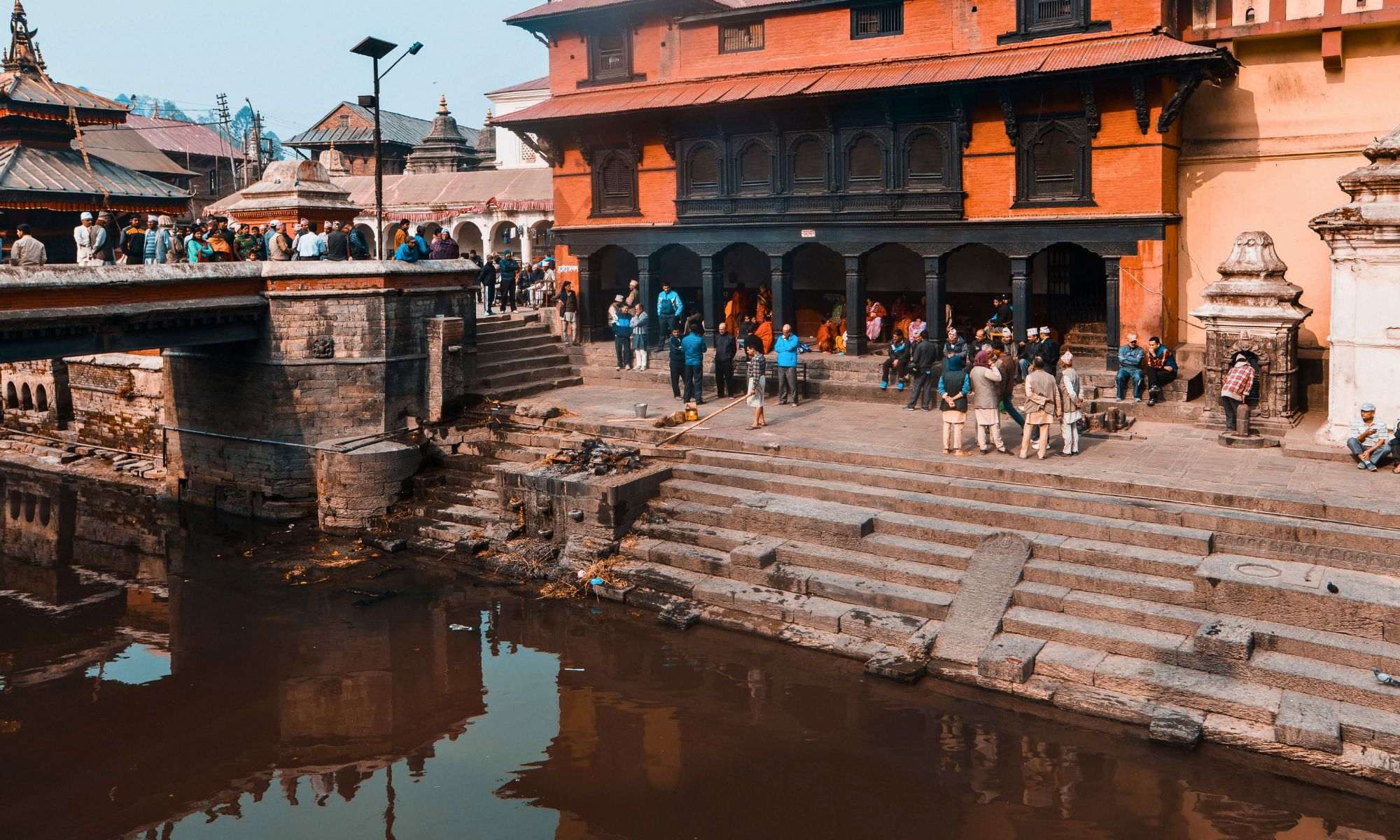
- Bagmati ghats: The stone steps along the river. Cremations happen on some of them, so please read the section on conduct below.
- East bank terraces: The viewing place the Nepal Tourism Board names for non-Hindu visitors.
- Ramchandra temple: A temple in the complex, where the Vivah Panchami pageant is held, according to the trust.
- Bishwarup temple, Mrigasthali: A temple in the Mrigasthali area to a form that combines Brahma, Vishnu and Maheshwar. Jung Bahadur Rana moved its statue here from Hanuman Dhoka.
- Gorakhnath temple: In Pashupati Kshetra, linked with the teacher Gorakhnath.
- Kirateshwar: A place in the area that hosts full moon concerts, according to the Nepal Tourism Board.
- Slesh Mantak forest: The forest around the site, with monkeys. Deer are kept here too.
- Guhyeshwari Temple: A Shakti Peeth (shrine to the goddess) on the Bagmati, near the main temple. Non-Hindus can’t enter this one either.
How should visitors behave near the ghats?
Treat the ghats as what they are, a place of grief. Cremations take place here, and families are often close by.
- Don’t photograph cremations, mourners, worshippers or priests.
- Keep your distance, stay quiet and keep paths clear.
- Don’t walk in front of people at prayer, or stand where stewards ask you not to.
- Stay clear of active rites and funeral processions.
Our Pashupatinath cremation ghats guide has more on conduct, and we keep that detail there on purpose.

What did the 2015 earthquake do here?
The April 2015 earthquake damaged 90 structures in the Pashupati area, according to PADT figures reported in June 2023. By then, 71 had been restored, 3 were being rebuilt and 16 were still waiting to begin.
Restored buildings named in that report include the Jayabageshwori Temple and the Lal Ganesh Temple. Reconstruction of the Bishwarup Temple at Mrigasthali was under contract. Its design took about five years to be approved, in October 2020, and we couldn’t find a report that it’s finished.
We found no later count. Wikipedia mentions damage to “one of the outer shrines”, and we found no report of major damage to the main temple itself.
How long do you need?
Allow 1 to 2 hours, or longer if you stay for the evening aarti. This is our estimate. One published seven-site tour gives only 30 minutes.

What is a good walking route?
This route keeps you in the public areas, and stays away from rites in progress.
- Enter by the counter you’re directed to, and ask staff which paths are open.
- Walk along the west bank to see the outside of the temple where allowed.
- Cross the Bagmati to the east bank terraces, and look at the temple from there.
- Walk up through the forest towards Mrigasthali and Gorakhnath if you have time.
- Return to the east bank for the aarti if you plan to see it.
The trust lists counters at Guheshwori, Vatsaleshwori, Tilganga and Gate No. 3.
What is the best time of day to visit?
Early morning and dusk both suit a visit, for different reasons. Wego suggests early morning for the morning temple schedule. Dusk is when the evening aarti takes place, so come then if that’s your aim.
The hours and aarti times conflict, so we don’t state one time as fact.
| Source | What it says |
|---|---|
| Temple trust site, darshan schedule | Open 4 am to 9 pm. Evening aarti 5 pm to 7 pm, night aarti 7 pm to 8 pm |
| Temple trust site, day schedule | Evening aarti 6:30 pm to 7:30 pm |
| Nepal Tourism Board | Western door opens at 5 am. Other doors 9:30 am to 2:30 pm. Aarti 6:30 pm to 7:30 pm |
| Wego, citing the trust | Inner gates close at 2 pm and reopen at 6 pm in winter, 7 pm otherwise |
Check with the trust or your hotel on the day, and get to the east bank early.

What are the rules for dress and photography?
Dress modestly, and avoid shorts and sleeveless tops, according to Wego. The Nepal Tourism Board says leather items, including shoes, belts and cameras, aren’t allowed in the main complex. See what to wear in Kathmandu for general advice.
Sources differ on photos. The Nepal Tourism Board says photography is prohibited inside the complex. The trust’s site says photos aren’t allowed in the main sanctum, and that outside areas and ghats may be photographed respectfully. Wego adds that photos are banned during religious ceremonies.
The safe rule is simple. Don’t photograph people, rites or the cremation area at all.
Are there steps, and is it accessible?
Expect steps at the ghats and on the east bank, because that’s what the ghats are. We found no measured count, so we can’t give a figure.
An Onlinekhabar article of November 2025, by a tour operator, says Pashupatinath and Swayambhunath “really do not welcome wheelchair users”. Ask before you book if you have limited mobility, and see our steps and mobility guide.

Which festivals happen here?
Maha Shivaratri is the main festival, when pilgrims and sadhus (holy men) from Nepal and India come to the temple. See our Shivaratri guide for the date.
The Nepal Tourism Board also lists these:
- Teej: A women’s festival with red saris and prayers for husbands. The board says mid-September, but the date follows the moon. CalendarLabs lists 3 September in 2027.
- Ekadashi: The 11th day of each lunar fortnight. The largest are Harishayani in June or July, and Haribodhini in October or November.
Expect big crowds and longer waits on these days. The trust’s site also lists Vivah Panchami and Yomari Punhi among its festivals.
How do you get there?
A taxi from Thamel is the simplest way, and takes about 15 to 20 minutes outside heavy traffic. Our Kathmandu taxi fare guide covers prices.
- Bus: Routes 11, 22 and 30 serve Gaushala, according to the trust. It’s about five minutes’ walk from there.
- Microbus or tempo: To Gaushala, then a short walk.

What is near Pashupatinath?
Boudhanath is about 20 minutes away on foot, according to Wikivoyage. See our Boudhanath guide. The two pair well, and our Kathmandu layover tour visits both.
Guhyeshwari is the closest named temple, near the main complex. It’s for Hindus only.
How do you visit with a guide or alone?
You can visit alone. Buy your ticket at the counter, keep to the public areas and ask staff when you’re unsure. A morning visit is the simplest to do by yourself.
A guide helps here with where to stand, what to avoid and which times apply that day. To weigh it up, see do you need a tour guide in Nepal.
Four tours on this page include the temple grounds. Our Pashupatinath and Boudhanath tour arrives at dusk, and we confirm the aarti time on the day.