What are the Pashupatinath cremation ghats?
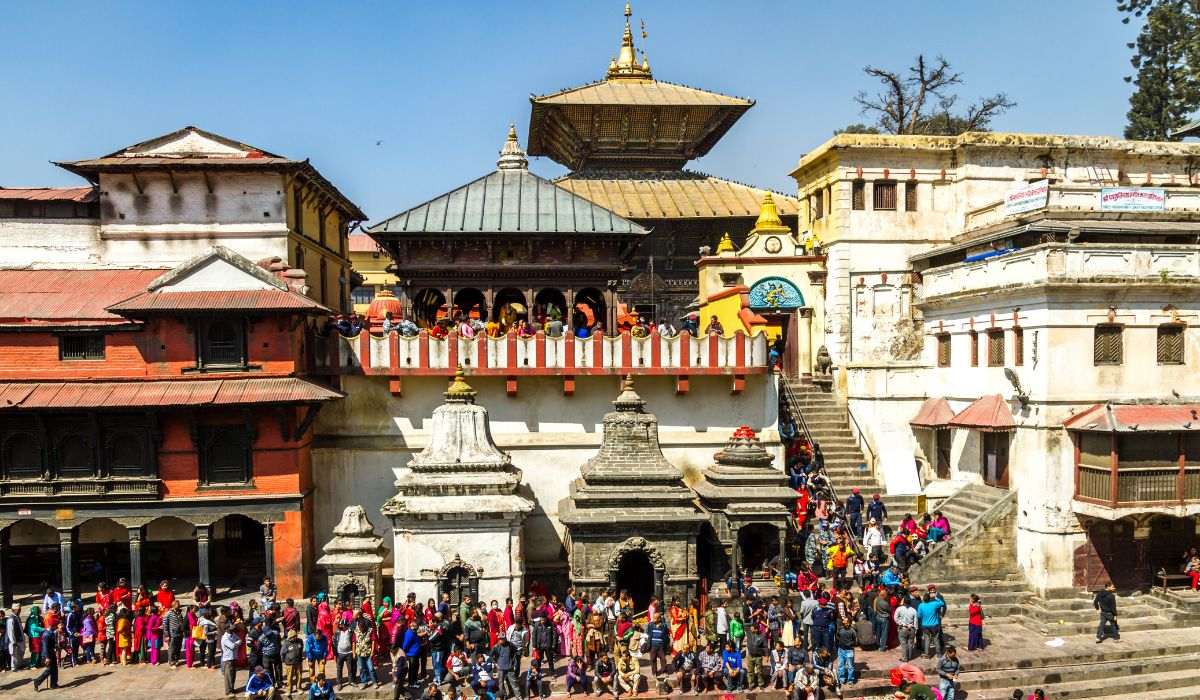
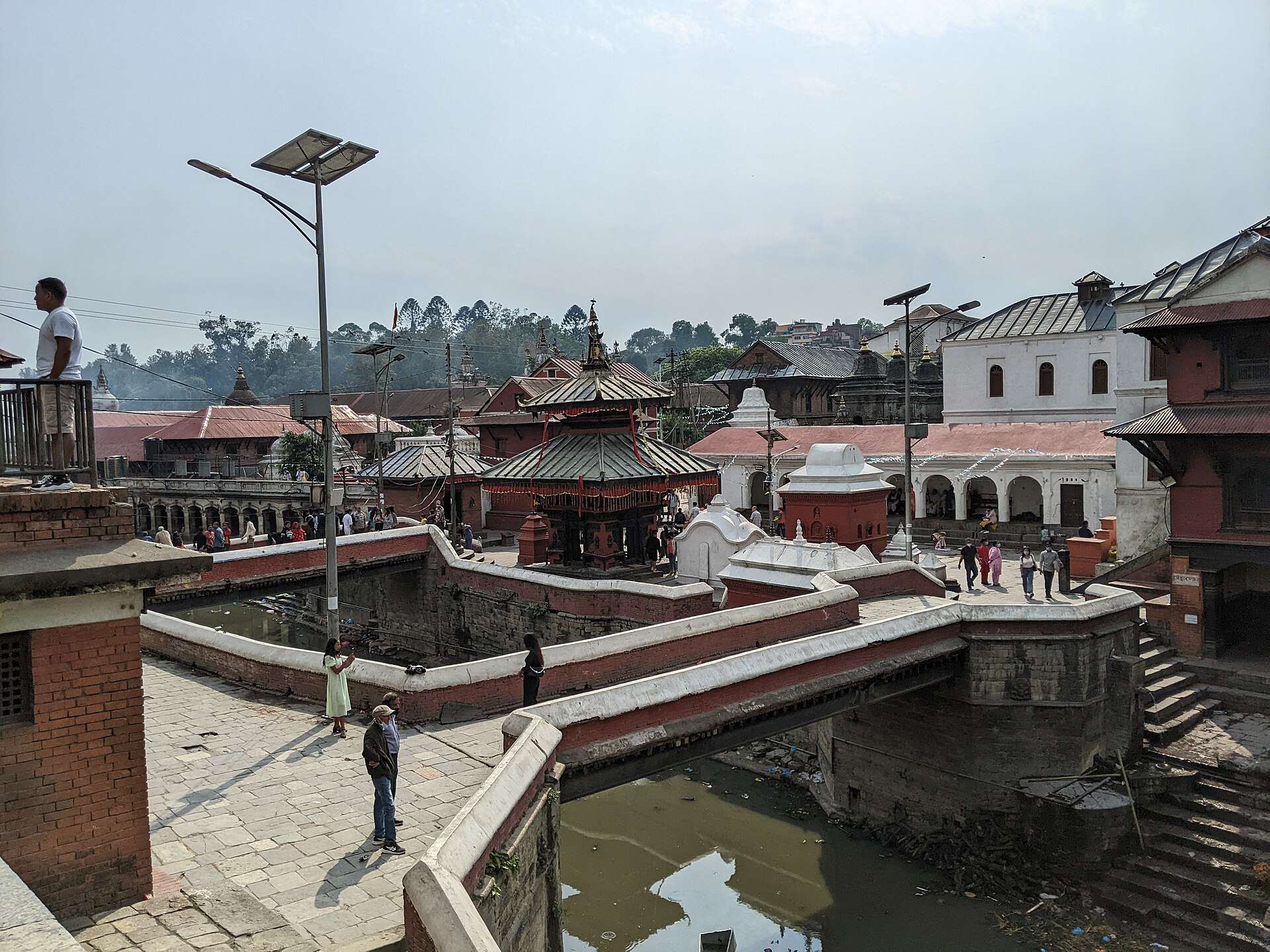
The Pashupatinath cremation ghats are working funeral sites along the Bagmati River, beside the Pashupatinath temple complex. A ghat is a riverside place with steps or platforms. ICOMOS, which advises UNESCO, describes the zone as having ghats for ritual bathing and cremation.
These aren’t historic exhibits. They serve Kathmandu’s families every day, and the people you can see there may have lost someone that morning. Please treat the place as you would a funeral at home, even though it’s in the open air.
Which ghats are used for what?
PADT, the government trust that runs the area, names three main places for cremation. The table sets out what it says.
| Place | What PADT says |
|---|---|
| Arya Ghat | One of the holiest cremation sites on the Bagmati, built during the reign of Pratap Malla. PADT says it was traditionally reserved for royalty, VIPs and high-status Hindus |
| Bhasmeshwor Ghat | The main public cremation site, with wood-fired cremation and ash immersion in the Bagmati |
| Electric Cremation House | Near Arya Ghat, with electric furnaces |
Spellings vary, so you’ll also see Aryaghat, Bhasmeshwar and Bhasmeshvar. You’ll hear about Gauri Ghat too, but the sources we opened mention it only as a place on the festival queue route, so we can’t describe it further.
How many cremations take place?
About 11,700 bodies arrived at Pashupati Aryaghat in the most recent full year we could find. The Rising Nepal, using PADT data, reported these figures on 30 July 2024, for 14 April 2023 to 12 April 2024.
| Measure | Year to April 2024 |
|---|---|
| Bodies arriving | 11,746 |
| Cremated on open-air pyres | 7,023 |
| Cremated in the electric crematoriums | 3,233 |
| Children’s bodies buried across the Bagmati | 1,441 |
That works out at about 32 arrivals a day, by our calculation. The same report gives 13,402 cremations during the COVID-19 pandemic in 2021.
So at most times of day, a funeral may be under way. PADT lists its ghat service as a 24-hour service.
Why is there an electric crematorium?
The electric crematorium gives families a faster option. The Rising Nepal says two furnaces were installed in January 2016 and a third in 2021. PADT says each cremation takes about 45 minutes, and that the facility handles 10 to 15 a day.
myRepublica’s report on the launch gave about 55 minutes, compared with 5 to 6 hours for firewood. It also linked the project to firewood use and to ash and remains entering the river. PADT said no one would be required to use it, and most cremations in the year to April 2024 were still on open-air pyres.
What happens at a Hindu cremation?
We’ll keep this short, because rites differ between families and communities, and we can’t speak for them. The facts we can source are that a body must be registered before it reaches the ghat, for a fee of Rs 200, and that at Bhasmeshwor the ashes are immersed in the Bagmati, according to PADT.
If you want to understand more, ask your guide quietly, away from the ghat. Please don’t ask mourners or the people working there to explain. Be wary of any explanation that sounds dramatic, including online.
How should visitors behave near the ghats?
Stay well back, stay quiet, and don’t photograph anything. Visitors of any faith may visit the ghats, according to PADT, and Wego reports that visitors of all backgrounds may use designated public areas. That access depends on visitors behaving well.
Don’t photograph cremations, bodies, mourners or families. This includes phones, video and long lenses from across the river. PADT permits respectful photographs at the ghats in general, but Wego’s visitor guide is clear that public ghats aren’t a licence to photograph grieving families. We take the plain view: if a funeral is in the frame, don’t take the picture. Drones need PADT’s written permission in any case.
- Keep your distance. Stay off the cremation platforms and away from anyone carrying a body.
- Give way at once. Funeral groups have priority on steps, paths and bridges.
- Keep your voice low. Don’t laugh, call out or play audio.
- Dress modestly. PADT doesn’t permit shorts or sleeveless tops on temple grounds. Our guide on what to wear in Kathmandu has more.
- Don’t offer money or ask questions of mourners. They’re not there for visitors.
- Keep children close, and explain beforehand what they might see.
Where can visitors stand?
PADT names the eastern bank of the Bagmati as the place to watch the evening aarti (lamp ceremony), and the Nepal Tourism Board mentions terraces across the river from the temple. We don’t suggest using either to watch a cremation.
We found no official map of viewing places or restricted places at the ghats. Follow barriers and steward directions where they exist. If you find yourself looking directly at a family, move on. For more on what’s open to you, read the Pashupatinath rules for non-Hindu visitors.
Can you visit Pashupatinath without seeing a cremation?
You can avoid most of it, but we can’t promise you won’t see one. The temple zone is large, and PADT describes temples and gardens well away from the river, including Visworupa in the Mrigasthali forest. The pyres are on the Bagmati, and ICOMOS says the zone extends along both banks, so smoke or a procession may still be in view.
If you’d rather not be near the ghats, say so when you plan your visit. Our Pashupatinath and Boudhanath tour runs in the late afternoon and dusk. Take it privately, and you can talk through the route with your guide before you arrive.