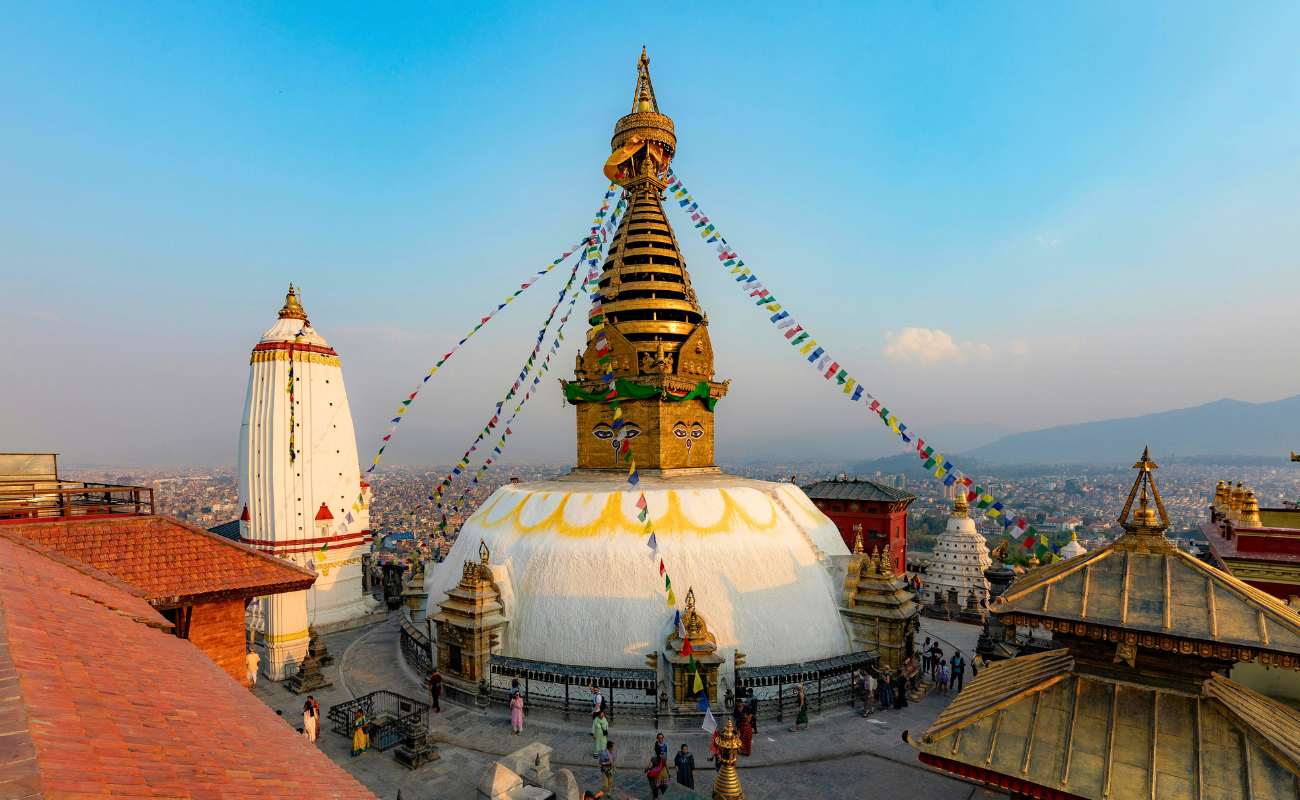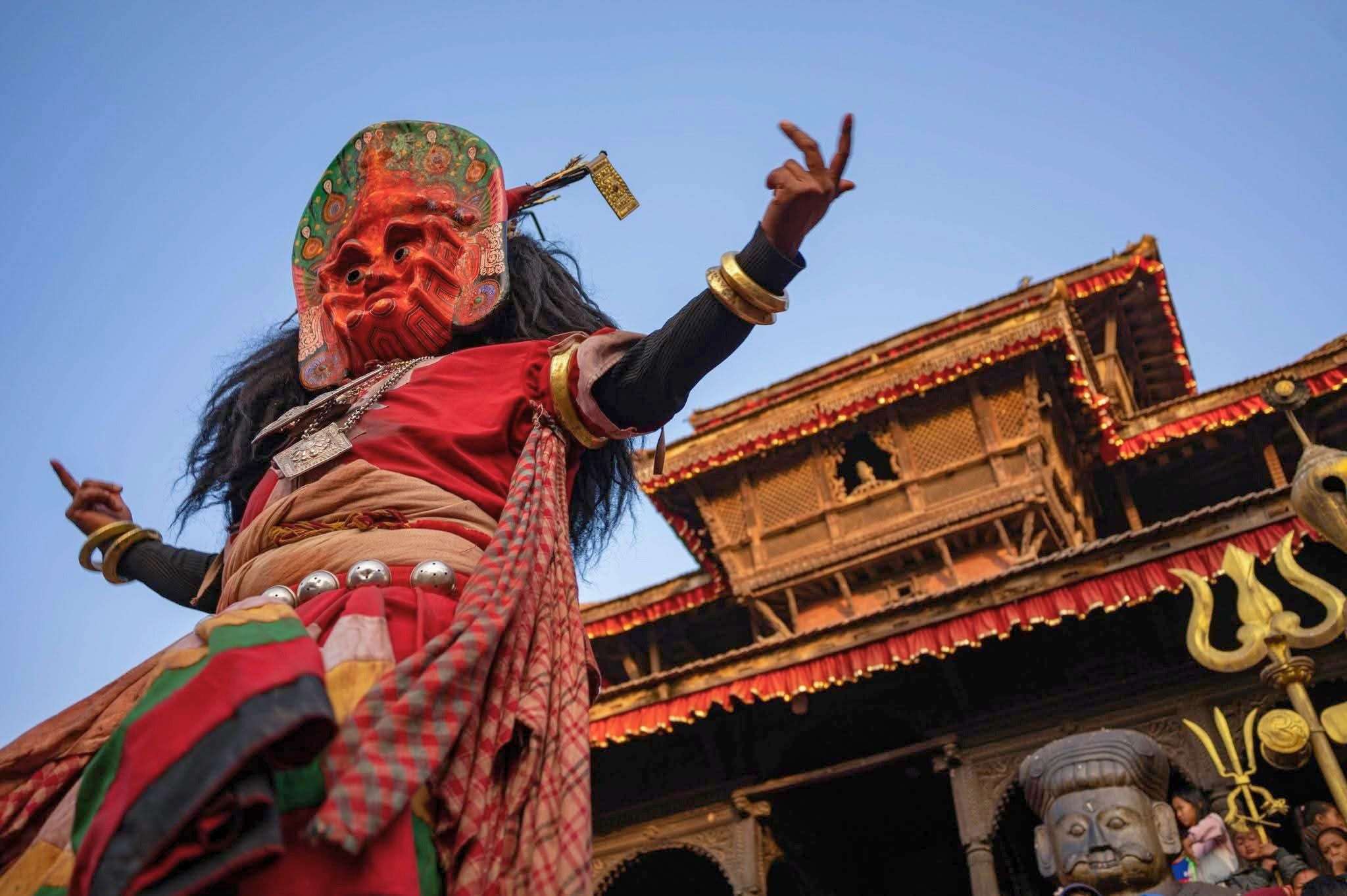
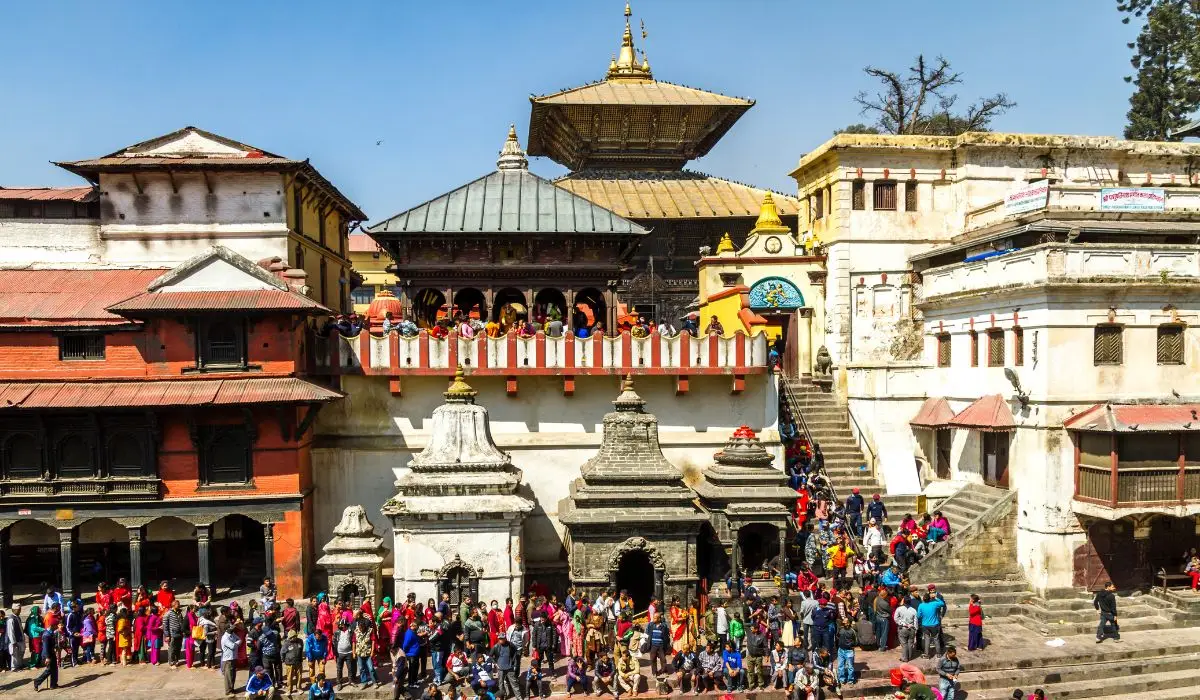
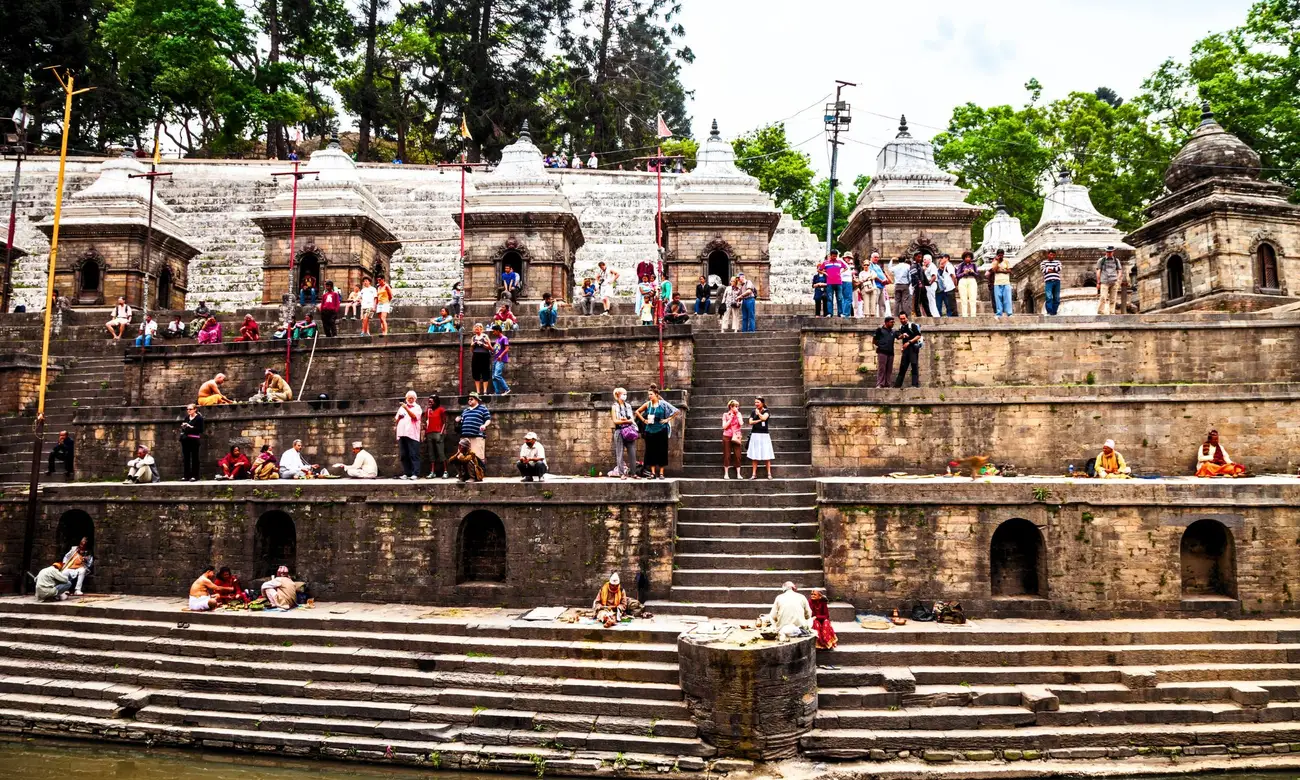
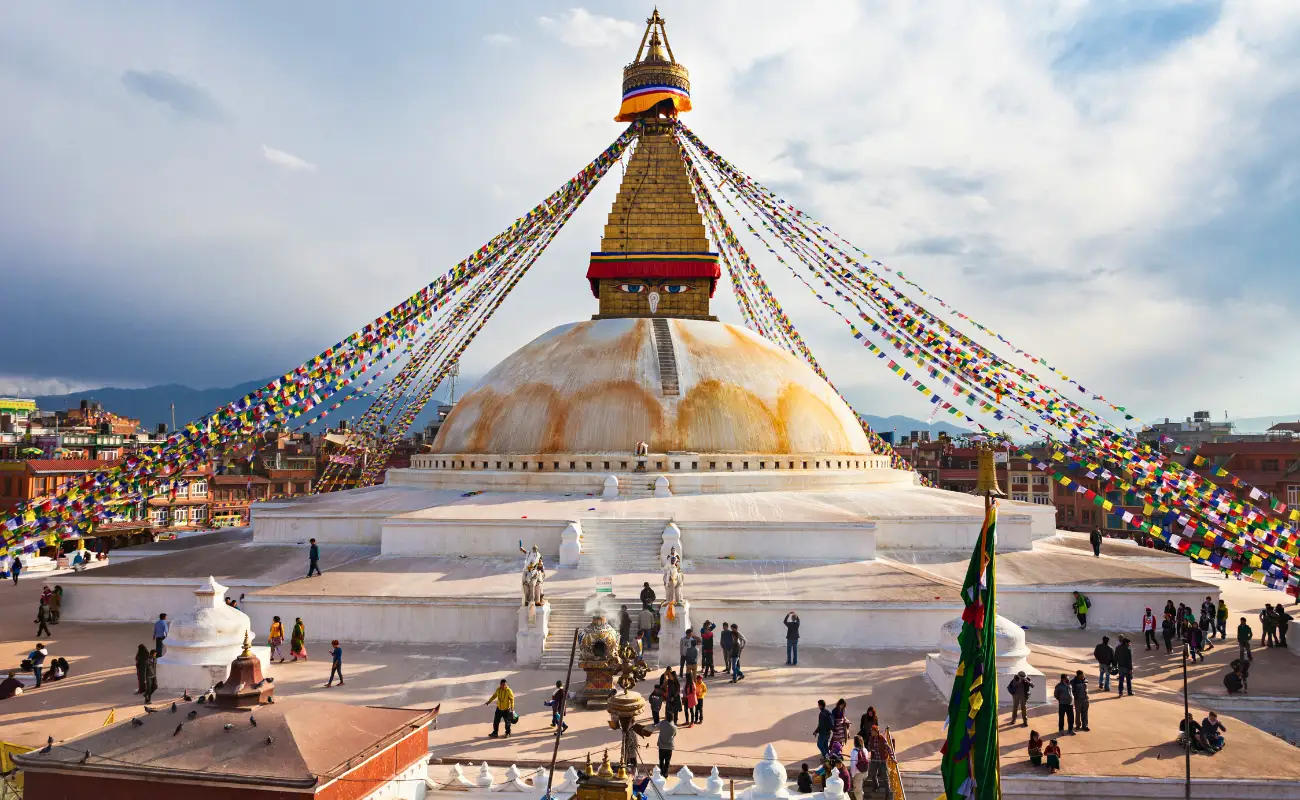
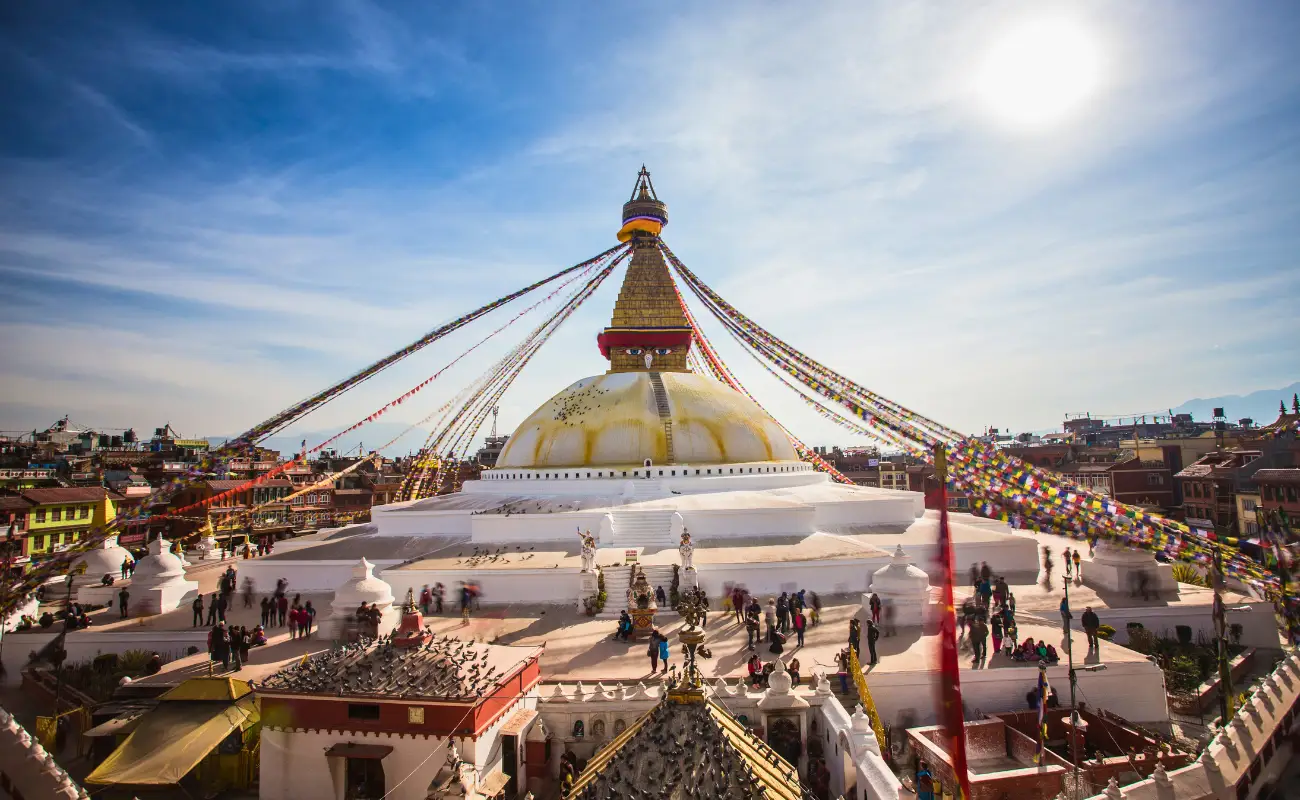
This Pashupatinath and Boudhanath tour is a 4 to 5-hour afternoon visit to the valley’s great Buddhist stupa and the Hindu temple complex of Shiva. It ends at dusk by the Bagmati River, with the option of watching evening aarti (the lamp ceremony) from across the water.
What can visitors actually see at Pashupatinath at dusk?
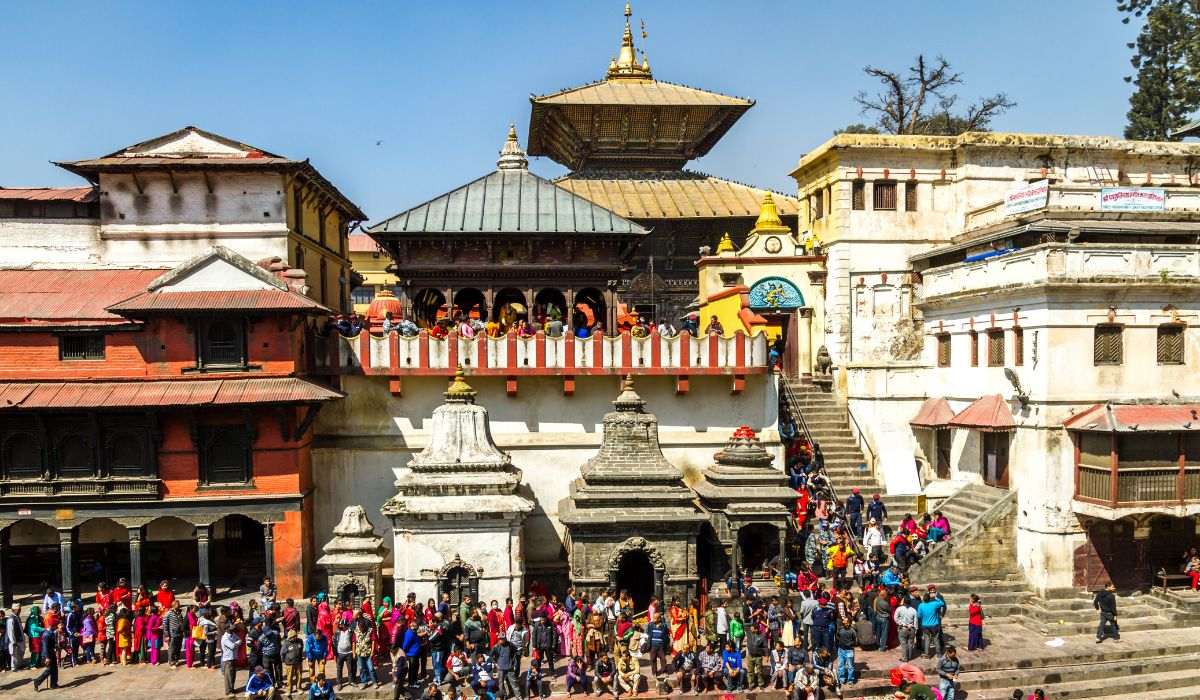
Visitors who aren’t Hindu can see the riverbank, the shrines around it and the evening ceremony from the far bank. The main temple is for Hindus only.
The Nepal Tourism Board says tourists view the temple from the back premises. A visitor guide citing the temple trust says people of all backgrounds may watch evening aarti from the eastern bank, in a designated space with stewards. Read the Pashupatinath rules for non-Hindu visitors before you go.
Why does this Pashupatinath and Boudhanath tour end with aarti?
The tour ends at Pashupatinath because the ceremony happens in the evening, and the stupa works well earlier in the afternoon. The two are about 2.8 km apart by road, says Rome2Rio, so the drive between them is short.
The start time moves with the seasons. Sunset is about 5:11 pm in mid-November and about 7 pm in mid-June, according to Sunrise-Sunset.org, so summer tours start later.
What will you see at each stop?
You’ll see the stupa in afternoon light, then the river and shrines of Pashupatinath as evening comes.
Boudhanath
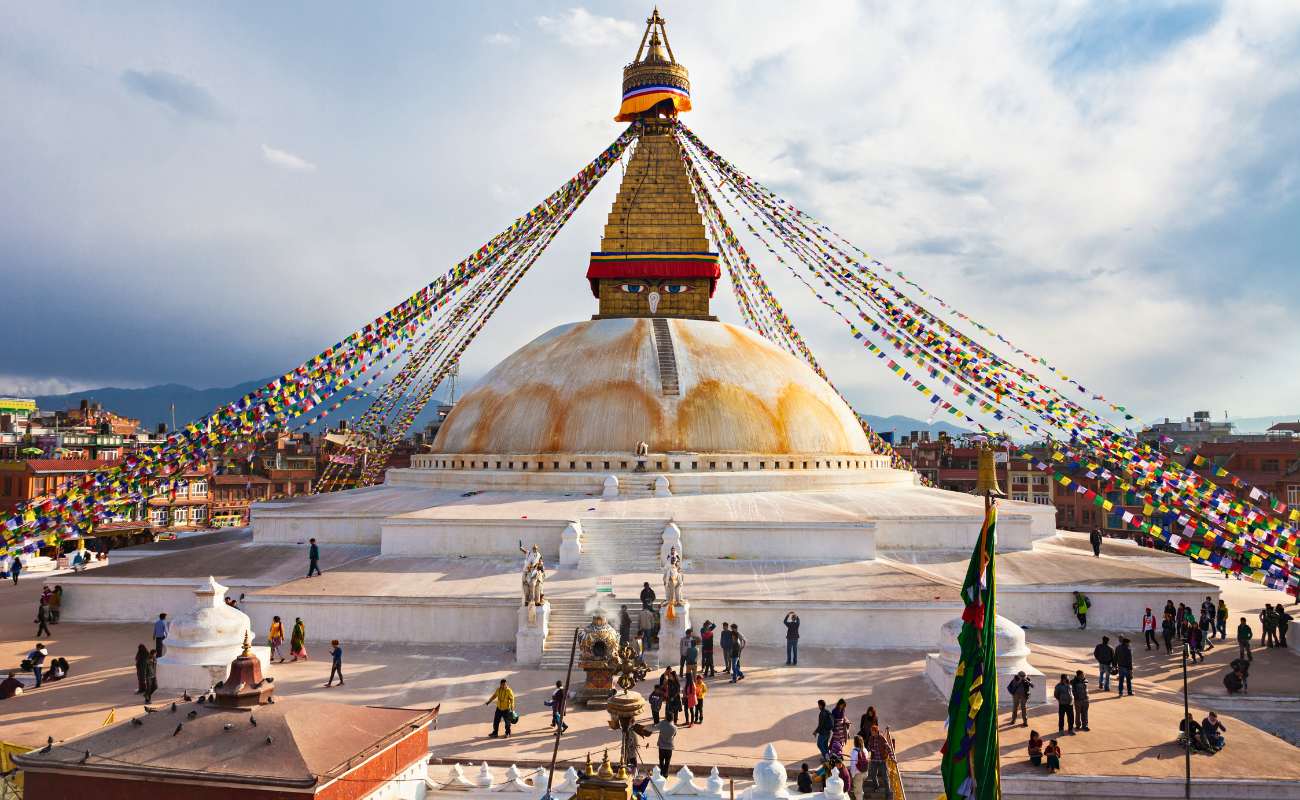
Boudhanath is a white stupa in the north-east of Kathmandu, about 36 metres high. More than 50 monasteries stand around it, and many Tibetan refugees settled here after 1959. Join the walk around the base, clockwise, and turn the prayer wheels with the crowd if you like.
Nepal Traveller called the evenings here “ethereal”, with butter lamps (called choime) lit as prayers, often for relatives who have died. This plan leaves before dark, so you may see few lamps. The lanes also have workshops making singing bowls and prayer flags. There’s a guide to the Boudhanath stupa if you want the history.
Pashupatinath
Pashupatinath is a complex of Hindu temples on the Bagmati River. Before dusk, you can walk the ghats (stone steps along the river) and the gardens and shrines around them. Cremations are visible on the bank, and you should keep your distance and your camera down.
Don’t photograph worshippers, priests or grieving families. For more on this, read our guide to the Pashupatinath cremation ghats. Remove your shoes before entering any shrine.
Watching Pashupatinath aarti from across the river
Pashupatinath aarti is an evening lamp ceremony that visitors can watch from the eastern bank. We can’t give you one reliable start time, as the temple trust’s published schedules conflict. Wego reports gates reopening at 6 pm in winter and 7 pm in other seasons, but it warns about the same conflict.
We confirm the time on the day. In winter, this plan may catch only the start of the ceremony, and in summer the whole tour runs later, so don’t book anything tight that evening. Wego also says photography is prohibited during ceremonies.
How does this compare with our other short tours?
The nearest alternative is the layover tour, which covers the same two sites from the airport and at any hour your flight allows.
| Tour | Time | Starts | Evening aarti? |
|---|---|---|---|
| This tour | 4 to 5 hours | Afternoon | Yes, if timing works on the day |
| Kathmandu layover tour | 4 to 6 hours | Tribhuvan Airport | Only if your flights happen to fit |
| Kathmandu sightseeing tour | 6 to 7 hours | Morning, four sites | No, it reaches Pashupatinath in daytime |
| Kathmandu half day tour | 4 hours | Your choice, two other sites | No |
Where does dinner fall?
Dinner falls after the tour, and it isn’t included. If you’re hungry before dusk, Boudhanath has rooftop restaurants looking over the stupa, according to Nepal Traveller in 2018, with Tibetan food such as thukpa (a noodle soup).
A snack at Boudhanath is the practical option, because there won’t be a natural meal stop once you reach the river.
What can go wrong, and how does the day change?
Timing is the main risk, because the ceremony is the fixed point and the traffic isn’t. Rain and evening traffic can both make the short drive slower.
- Traffic: the Kathmandu Post reported in June 2026 that a Ring Road section near UNESCO sites was still waiting on its design. On a private tour, you can leave Boudhanath earlier.
- Rain: the UK Foreign Office says monsoon normally runs from June to October. Wet stone steps at the ghats need care.
- Festivals: festival days can close roads or fill the area, one operator warns. Expect to move slowly if so.
- Young children: one operator warns that cremations are visible and suggests telling young children beforehand.
- Leather: a visitor guide reports that leather items are barred from the main complex. Leave belts and bags at your hotel if you can.
The fee at Pashupatinath is NPR 1,000 for foreign visitors, as listed by the Nepal Tourism Board in November 2026, per day and per entry. Indian and Nepali visitors enter free. You pay at the counter, as entry fees aren’t part of the tour price.