How do Boudhanath and Swayambhunath compare?
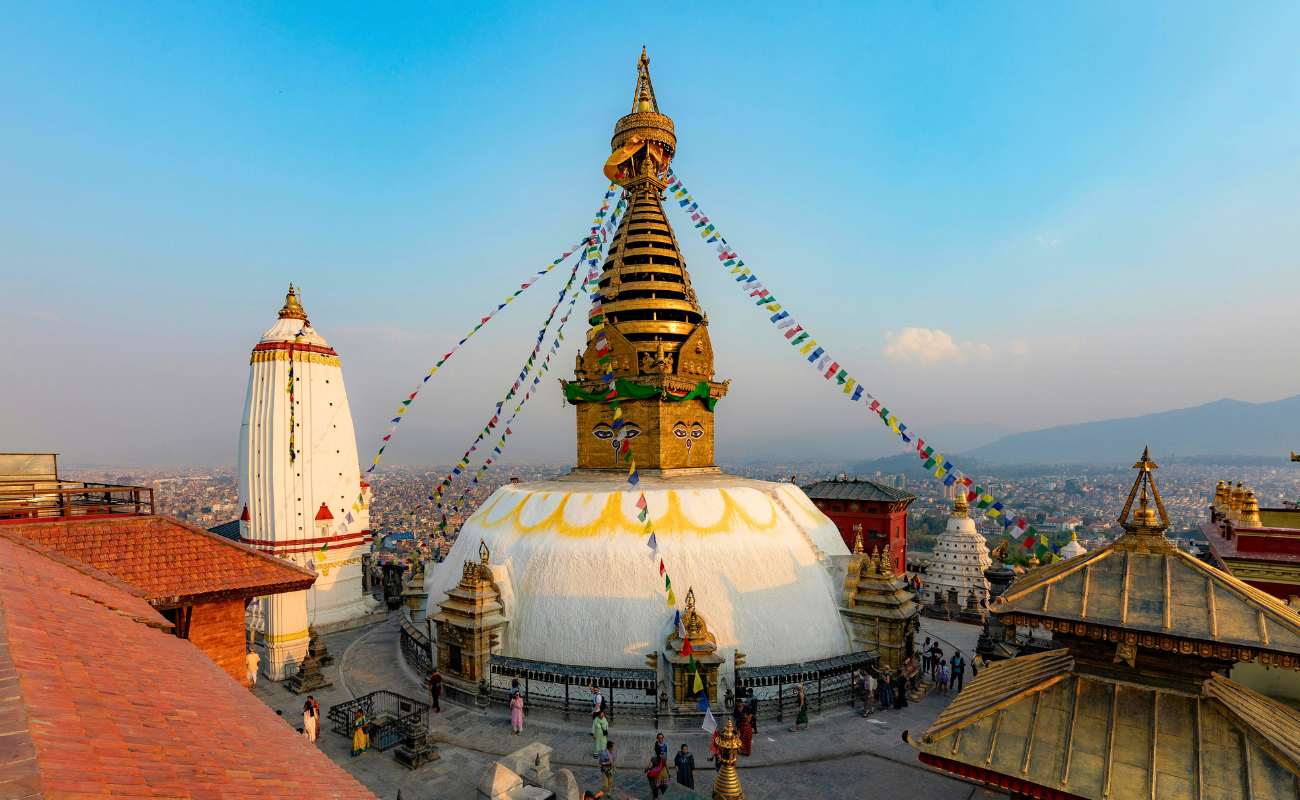
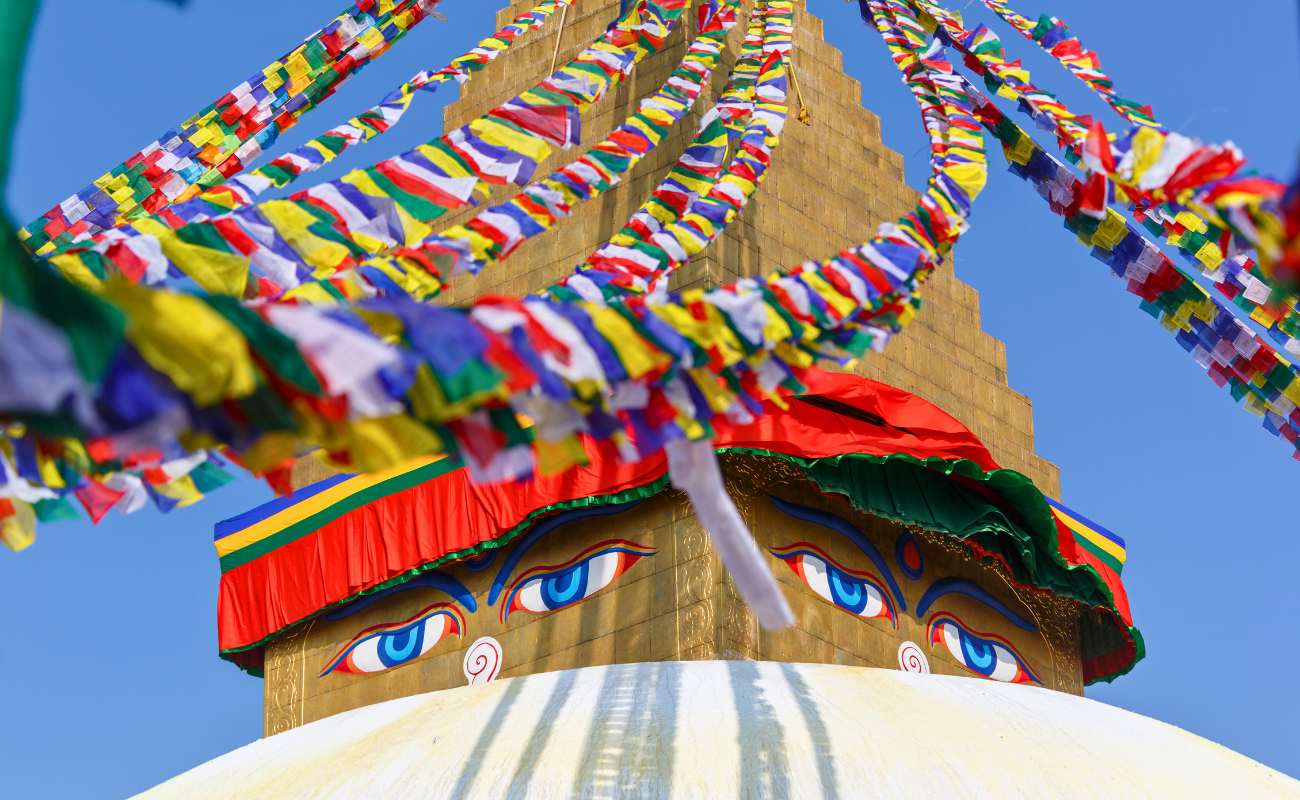
Boudhanath and Swayambhunath are both Buddhist stupas in Kathmandu, and both belong to the same UNESCO property, but they feel quite different. A stupa is a dome-shaped Buddhist monument, here topped by a tower painted with Buddha eyes. Boudhanath sits on flat ground in a neighbourhood. Swayambhunath sits on top of a hill.
| Point | Boudhanath | Swayambhunath |
|---|---|---|
| What it is | Largest stupa in Nepal, according to ICOMOS | Oldest Buddhist monument in the valley, according to ICOMOS |
| Setting | On the plain, ringed by a circular street of houses and shops | On a hilltop, about two miles west of the old town |
| History in short | Origins in the 5th century per ICOMOS. Present structure most likely 14th century per Wikipedia | Renovated in the 14th, 17th and early 20th centuries per ICOMOS. A chronicle credits King Vrsadeva with earlier work, per Wikipedia |
| Height or climb | Stupa rises 36 metres, per Wikipedia citing the Department of Archaeology | Stairway commonly given as 365 steps, though published counts run from 318 to 424. A road also reaches the top |
| What’s around it | Over 50 monasteries in the wider area, plus restaurants and guesthouses, per Wikipedia | Temples and shrines on the hill, large green areas, and resident monkeys |
| Fee, foreign visitors | NPR 400 | NPR 200 |
| Protected core | 1.27 hectares, the monument itself | 32.63 hectares, the Sacred Hill |
| After the 2015 quake | Upper part rebuilt, and reopened in November 2016 | Stupa stood, but temples on the hill were damaged |
Fees are as listed by the Nepal Tourism Board in November 2026. Our guide to Kathmandu entry fees covers all seven sites.
Which should you choose with limited time?
Choose Boudhanath if walking is hard for you, and Swayambhunath if you’d like a hilltop setting and a lower fee. If you have half a day, the choice mostly comes down to which other site you want to pair it with, since these two are on opposite sides of the city.
| If you | Choose | Why |
|---|---|---|
| Find stairs difficult | Boudhanath | ICOMOS places it on the plain |
| Want a hilltop setting | Swayambhunath | It’s on top of a hill, with temples around the stupa |
| Want a living Tibetan Buddhist neighbourhood | Boudhanath | Wikipedia says many Tibetan refugees settled here after 1959 |
| Want to see the oldest Buddhist monument in the valley | Swayambhunath | ICOMOS gives it that status |
| Are between flights | Boudhanath | Our layover tour pairs it with Pashupatinath |
| Want to add the old royal square | Swayambhunath | Our half-day tour pairs it with Kathmandu Durbar Square |
| Want to see Pashupatinath at dusk | Boudhanath | Our 4 to 5-hour tour pairs them |
We haven’t timed visits ourselves and we won’t quote a figure as fact. If you have a whole day, the Kathmandu sightseeing tour covers both.

What’s the history of Boudhanath?
Boudhanath’s dates are uncertain, and sources differ by centuries. ICOMOS says its origins go back to the 5th century, and that it has been renovated many times. Wikipedia says Newar chronicles mention a stupa here as early as the 5th century, and that the present structure was most likely built in the 14th. An article in Malaysia Airlines’ magazine says about 600 AD.
The surroundings are newer. Wikipedia says many Tibetan refugees settled here after the 1959 Tibetan uprising, and that the community built more than 50 monasteries around it. ICOMOS says the stupa’s religious importance drew Buddhists from Nepal and Tibet, and it notes that most nearby buildings are recent concrete structures. Read more on our page about Boudhanath.
The 2015 earthquake badly damaged the upper part. The Department of Archaeology reported cracks and dislocated bricks at the top, and the structure above the dome was carefully dismantled and rebuilt in traditional materials, in about 16 months. Gulf Times gives a cost of Rs 230 million. It reopened on 22 November 2016, according to The Kathmandu Post and Wikipedia.
What’s the history of Swayambhunath?
Swayambhunath has the older reputation, but no firm founding date. ICOMOS calls it the oldest of the Buddhist monuments in the valley. Wikipedia says legend ties it to a much earlier Buddha, and that a chronicle credits King Vrsadeva, great-grandfather of Manadeva, with work here. The Malaysia Airlines magazine says about 1,500 years old.
Its setting is what most people remember. ICOMOS describes a large stupa with a flattened dome on a circular base, surrounded by many temples and shrines on a hill with big green areas. Wikipedia says much of the iconography comes from the Vajrayana tradition of Newar Buddhism. Read more on our page about Swayambhunath.
The hill took damage in 2015, too. The Department of Archaeology’s report of February 2017 says the Pratappur temple was dismantled because it had become unsafe, that Anantapur was completely damaged, and that Shantipur was severely affected. Khabarhub reported in March 2025 that the Pratappur and Anantapur renovation was complete. Our Kathmandu earthquake restoration tracker gives the latest status we could find.

How many steps are there at Swayambhunath?
The stairway is commonly given as 365 steps, including in Malaysia Airlines’ magazine, though published counts run from 318 to 424. ECS Nepal says 365 has no solid basis, and we found no official count. Wikipedia only mentions “a long staircase” from the east and a less used stairway to the south-west.
A road also reaches the top, so the long stairway is optional. Tell your guide before the tour if you want to avoid the climb. Boudhanath has no comparable climb, as it’s on the plain. Our page on steps and mobility at the sites covers this in more detail.
What will you actually do at each one?
You’ll mostly walk, look and watch people worship, at both sites. At Boudhanath, the main activity is walking around the stupa clockwise along the circular street with other visitors and pilgrims. The Department of Archaeology also reported the Mane wall here re-plastered after the quake.
At Swayambhunath, you can explore the shrines around the stupa on top of the hill. Monkeys live there, so keep food out of sight. Wikipedia describes them as wandering around the complex.
Both are living places of worship. Dress modestly, ask before photographing monks or people praying, and give way to anyone at prayer. Our guide on what to wear in Kathmandu has more.

When are they busiest?
The largest crowds we can document come on Buddha Jayanti, the full-moon festival of the Buddha’s birth, enlightenment and death. The next one is listed for 20 May 2027 in published calendars. The Kathmandu Post reported early-morning rituals at Swayambhunath in 2025, with a sacred relic shown there once a year. Nepalnews reported large crowds at Boudhanath the same day.
If you’d like to see one of these sites on that day, read our guide to Buddha Jayanti in Kathmandu. We didn’t find reliable data on which times of day are quietest at either site on an ordinary day.