What can you see in one day in Kathmandu?
Four of the seven UNESCO monument zones fit into one full day. Those are Swayambhunath, Kathmandu Durbar Square, Pashupatinath and Boudhanath. They give you the old royal city, Hindu worship and two great Buddhist stupas (dome-shaped shrines).
Bhaktapur and Changu Narayan are in the east of the valley, so leave them for another day. If you’d like to see all seven anyway, the 7 UNESCO Sites in One Day tour takes 9 to 11 hours, and it’s a fast day.
What is the best order for one day?
Go west to east, and end at Boudhanath. This puts your two longest drives outside the worst traffic and leaves the stupa for the end of the day, when you can slow down and walk its circuit.
The times below assume you start in Thamel, the main tourist area. The drive allowances are our own planning figures, because we couldn’t find a published dataset of drive times between sites. Treat them as a guide, and add more if you’re moving during rush hour.
| Time | What to do | Notes |
|---|---|---|
| 8:00 am | Leave your hotel | Swayambhunath is about 4 km away, according to Maya Manor Hotel |
| 8:30 to 9:30 am | Swayambhunath | NPR 200. A road reaches near the top, so the stairs are optional |
| 9:30 to 10:00 am | Drive to Kathmandu Durbar Square | About 2 km in a straight line, but through old lanes and morning traffic |
| 10:00 to 11:30 am | Kathmandu Durbar Square | NPR 1,000. The fee includes the Tribhuvan Museum |
| 11:30 am to 12:30 pm | Lunch | Near the square, or walk through Asan market first |
| 12:30 to 1:15 pm | Drive to Pashupatinath | About 4 km in a straight line. Allow for traffic |
| 1:15 to 2:45 pm | Pashupatinath | NPR 1,000. The main temple is for Hindus only |
| 2:45 to 3:15 pm | Drive to Boudhanath | Under 2 km in a straight line |
| 3:15 to 5:15 pm | Boudhanath | NPR 400. Walk around the stupa clockwise, as many times as you like |
| 5:15 to 6:15 pm | Drive back to Thamel | About 7 km. This is rush hour, so expect it to be slow |
All fees here are for foreign visitors, as listed by the Nepal Tourism Board in November 2026. The Kathmandu entry fees page has the other nationality rates and the figures that sources still dispute.

How does traffic change this plan?
Rush hour runs roughly 8 am to 10 am and 4 pm to 7 pm, according to In Your Pocket, and travel times can roughly double. You can’t avoid all of it in a full day. You can only choose where you spend it.
The kimkim guide gives a useful example of how far times swing. It says the 6 km from Thamel to Patan Durbar Square takes about 10 minutes with no traffic, and that you should expect roughly half an hour.
What should you know at each stop?
Each stop has one or two practical points that catch people out.
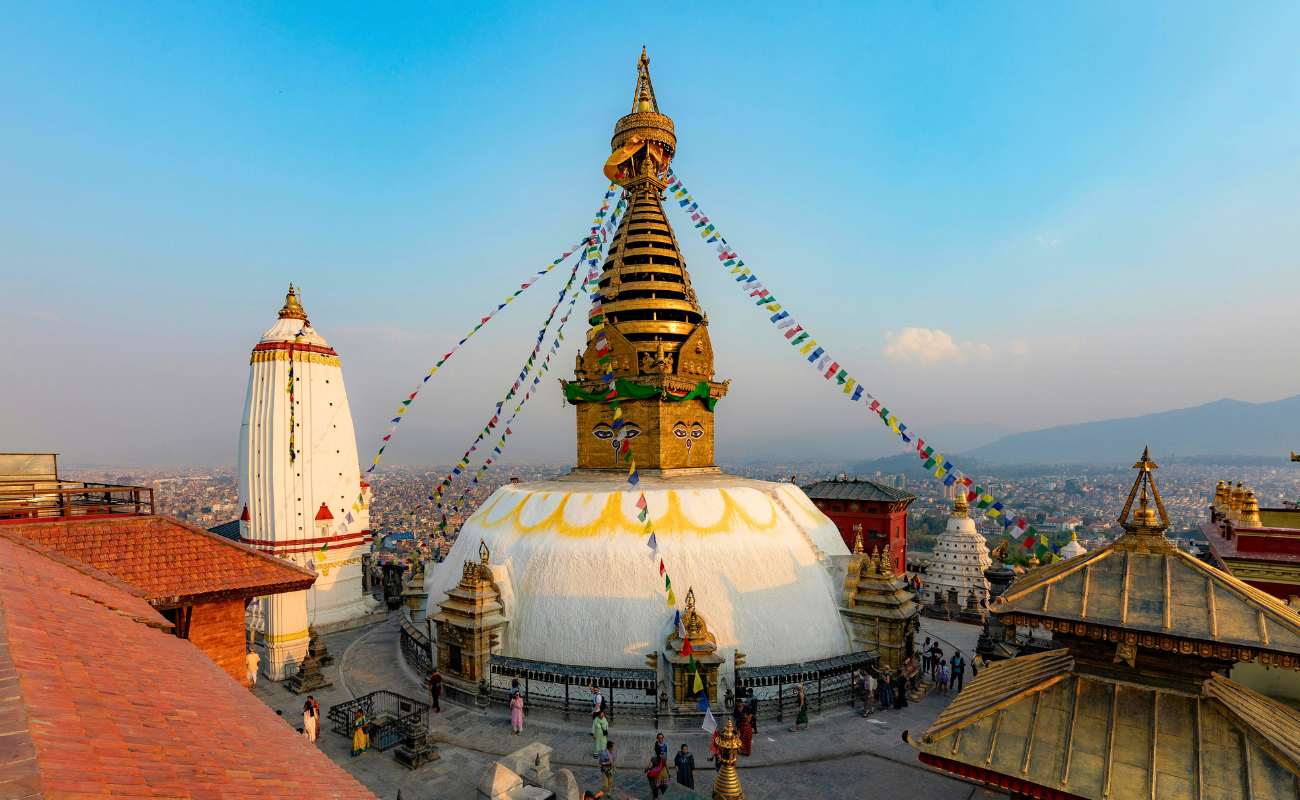
Swayambhunath is a Buddhist hilltop stupa west of the city. The main stairway is commonly given as 365 steps, though published counts run from 318 to 424. The Nepal Tourism Board calls them “exceedingly steep”. A motor road climbs almost to the top if you’d rather skip them. Wikivoyage warns that the monkeys may carry rabies, so keep your distance and keep food out of sight.
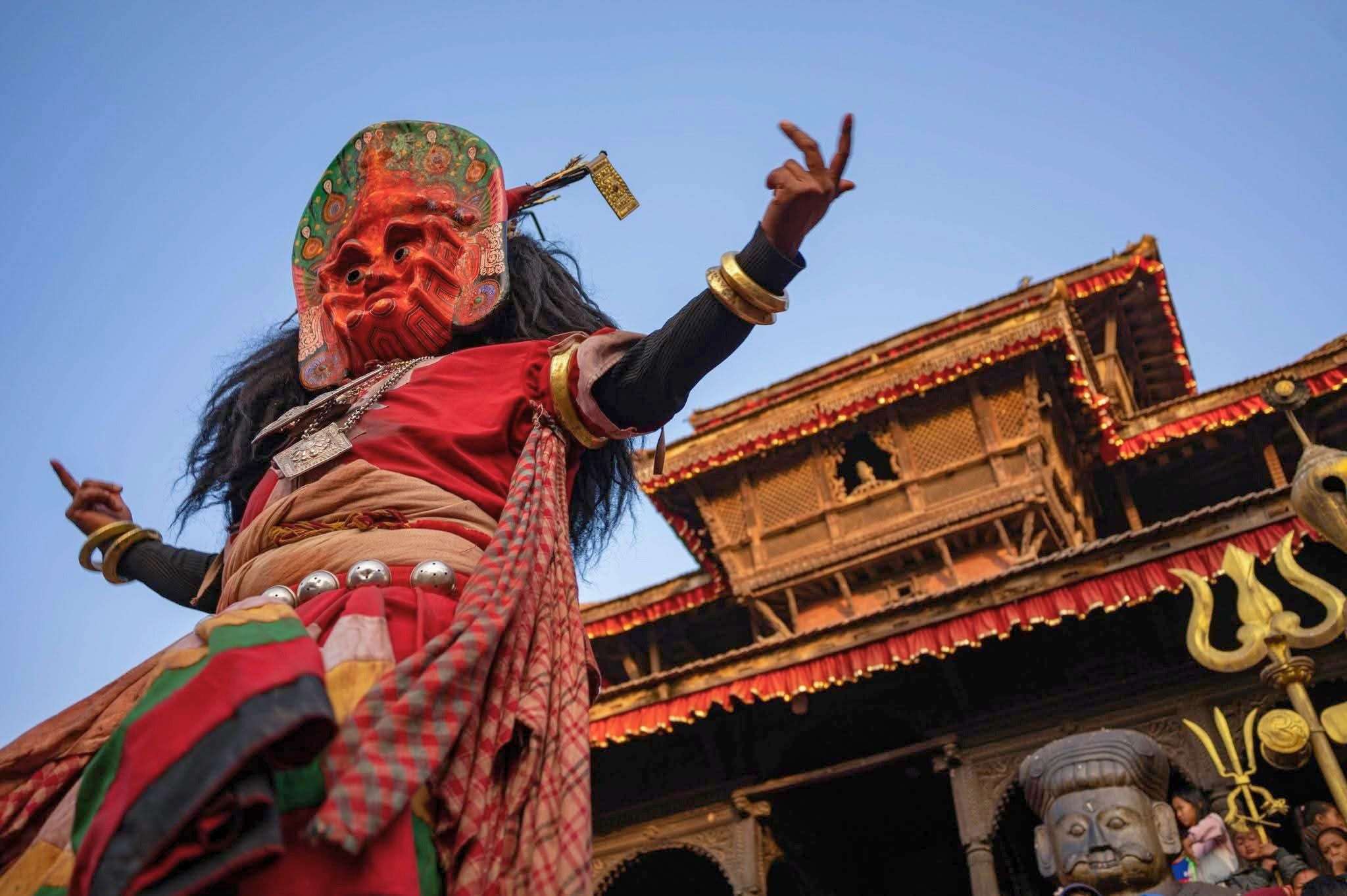
Kathmandu Durbar Square is the old royal palace square, and it’s still a working part of the city. Don’t expect every building to look as it did before the 2015 earthquake. The Department of Archaeology reported 825 of 920 damaged heritage sites rebuilt nationally by August 2026, so repair work is still going on. Kumari Ghar is at the edge of the square. Don’t photograph the Kumari.
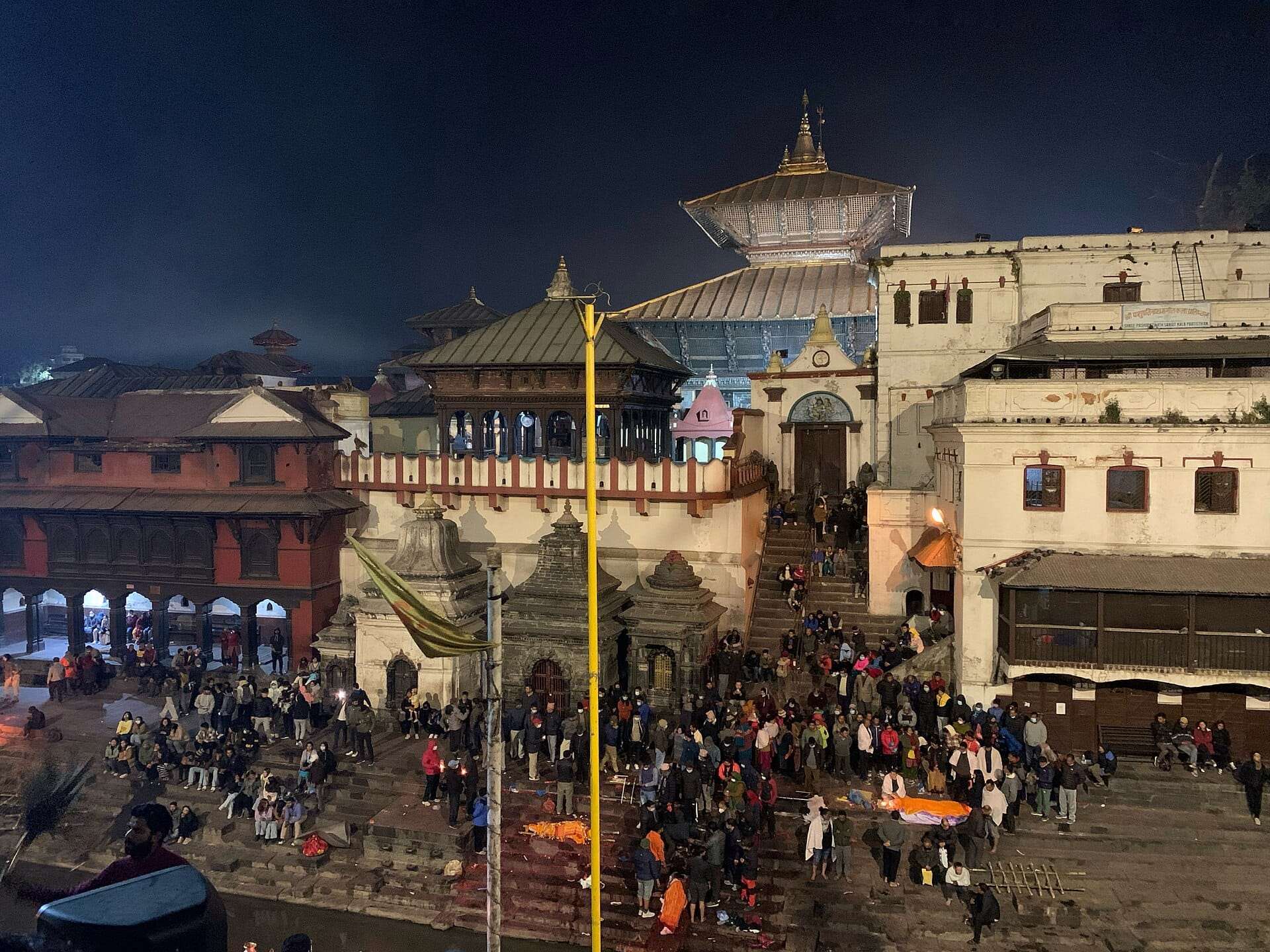
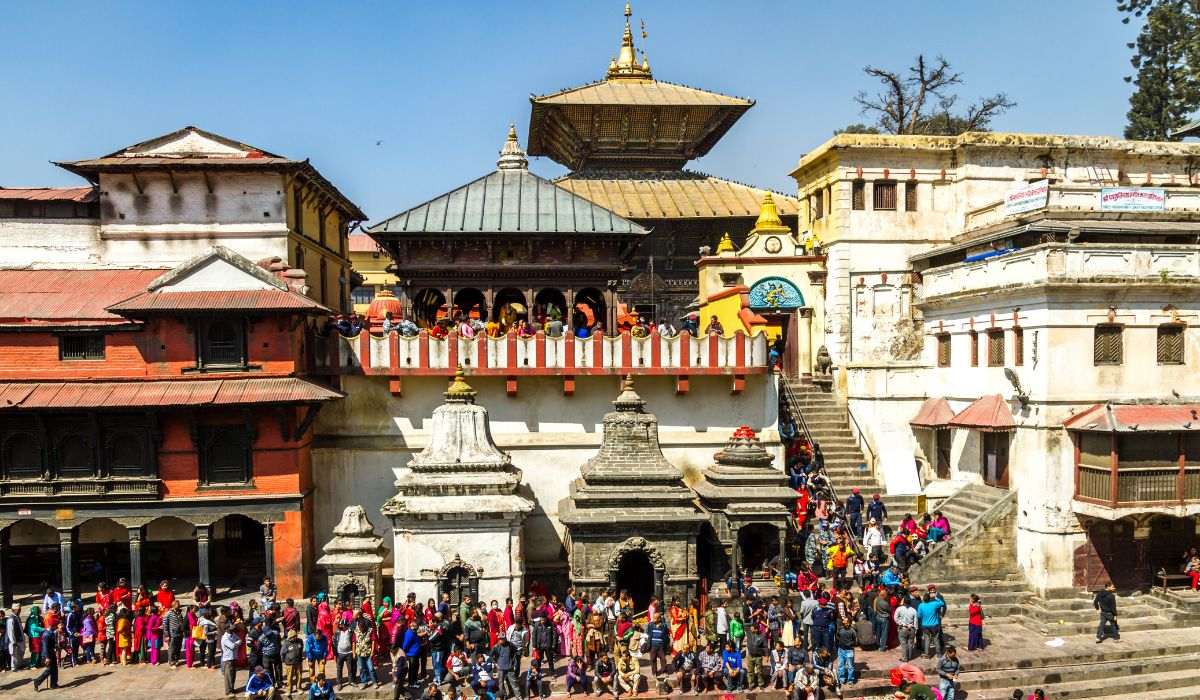
Pashupatinath is a Hindu temple complex to Shiva on the Bagmati River. Non-Hindu visitors can use the grounds, ghats and nearby shrines. Cremations take place on the ghats, so keep your distance from mourners and don’t photograph them. Dress with care, and read what to wear in Kathmandu first, because the temple trust’s rules are strict.
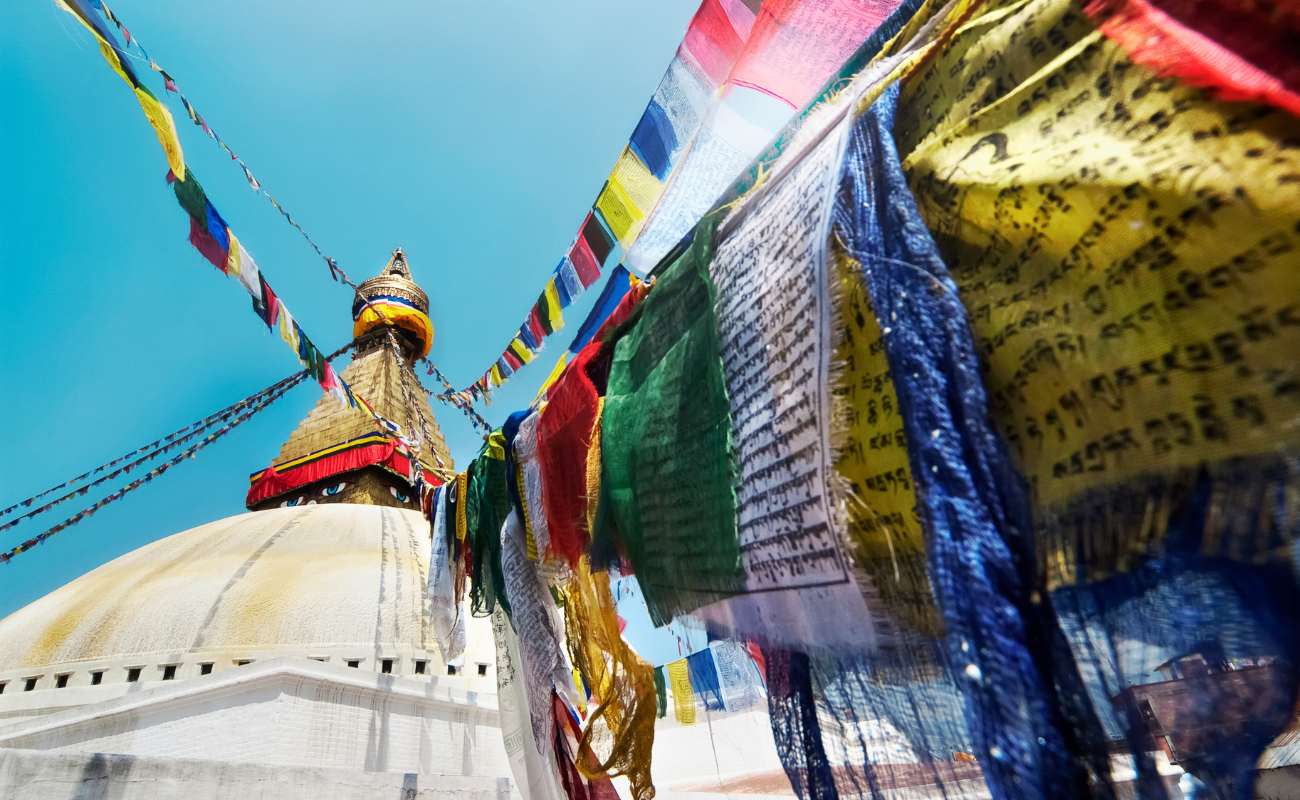
Boudhanath is a Buddhist stupa in the north-east of Kathmandu, ringed by monasteries. Walk with the crowd in a clockwise direction. It’s the easiest stop to enjoy without a guide.

Can you see the evening aarti in one day?
Yes, if you swap the last two stops. Aarti is the evening lamp ceremony, and non-Hindu visitors can watch it from the eastern bank of the Bagmati, according to the Pashupati Area Development Trust.
Visit Boudhanath from about 2:30 pm, then move to Pashupatinath in the late afternoon and stay until aarti. Published aarti times conflict, so ask your hotel or guide on the day rather than relying on a time you read online. The return to your hotel will run later, so eat before or after with that in mind.
The Pashupatinath and Boudhanath at Dusk tour follows this order as a 4 to 5-hour afternoon outing.
What is the plan for a rainy day?
Move indoors in the middle of the day, and keep the stupas for any dry spell. Rain is common from June to September, and these three museums give you somewhere to go.
| Place | What it is | Check first |
|---|---|---|
| Patan Museum | Art museum in a palace wing on Patan Durbar Square, included in the square’s ticket | Sources conflict. Kathmandu.im lists 10:30 am to 5:30 pm with closures on government holidays. Asianart.com lists 10:30 am to 4:30 pm, closed Tuesdays |
| Narayanhiti Palace Museum | The former royal palace, a museum since 2009 | The museum website lists NPR 1,000 for foreign visitors and Thursday to Monday, 9:30 am to 2:30 pm, as of November 2026. Older listings give other days |
| Taragaon Museum | Newar art and thangka paintings near Boudhanath, on the Hyatt Regency grounds, according to Nepal Traveller | We couldn’t confirm its hours, so phone first |
A simple rainy version is Patan in the morning, with its square and museum, then Narayanhiti after lunch, then Boudhanath if the rain stops. Stone steps get slippery when wet, so take the road option at Swayambhunath or skip it.

Should you do this on your own or with a guide?
You can do this plan on your own with taxis. Each site sells its own ticket, and none of the four requires a guide. A taxi for each leg, agreed in advance, works well for confident travellers.
A guide earns their fee mainly at Kathmandu Durbar Square and Pashupatinath, where the stories aren’t obvious from what you can see. Our Kathmandu Sightseeing Tour covers these four stops in 6 to 7 hours, private or group. If you only have a morning, the Kathmandu Half Day Tour covers Swayambhunath and Kathmandu Durbar Square in about 4 hours.
Have two days? A second day adds Patan, Bhaktapur and Changu Narayan, so read the two-day plan before you commit.