What is Asan bazaar in Kathmandu?
Asan is a market, ceremonial and residential square in central Kathmandu, also spelled Ason. Wikipedia describes it as a fine Newar example of a traditional Asian bazaar. Newar people are the indigenous community of the valley.
Six streets meet here, and people come from across the city to shop. You can buy foodstuffs, spices, textiles, electronics and bullion, according to Wikipedia. Most of the population are from the Tuladhar, Maharjan, Shrestha, Bajracharya and Shakya communities, the same source says.
Where is Asan, and how far is it from Thamel?
Asan is in the old city, between Thamel and Kathmandu Durbar Square. By our own map measurement, it’s 0.9 km from Thamel and 0.6 km from the square, both in a straight line.
Kathmandu.im, an unsigned guide, gives a 15-minute walk from Thamel. The lanes are crowded, so your time may differ.

What is the history of Asan?
Asan owes its existence to trade. It sits on one of the two legendary India to Tibet trade routes through Kathmandu, Wikipedia says, and the route runs diagonally from Durbar Square through Asan and on to the north-east. That’s why it has been a main marketplace for so long.
Its founding is a legend. A stone fish in the square marks where a fish is said to have fallen from the sky, according to Wikipedia. We found no firm founding date.
The goddess has a story too. Nepali Times, in a 2001 excerpt from a 1994 book, says temple records are dated 1839 and that the building needed repair by the end of the 19th century. Tradition says she once lived in Benares or Calcutta, and asked to be brought to the mountains. Republica adds that some of the buildings go back to the time of Prithvi Narayan Shah and Bhimsen Thapa, and that some shops are in their third or fourth generation.
What is there to see in Asan?
The square packs several shrines into a small space, and all of these are listed by Wikipedia unless noted.
- Annapurna Ajima Temple: Honours the goddess of abundant food grain, the patron of the neighbourhood. Wikipedia says she’s represented by a filled grain measure. Nepali Times describes three gilded roofs, and a silver purnakalash (a ritual water pot) in place of an image.
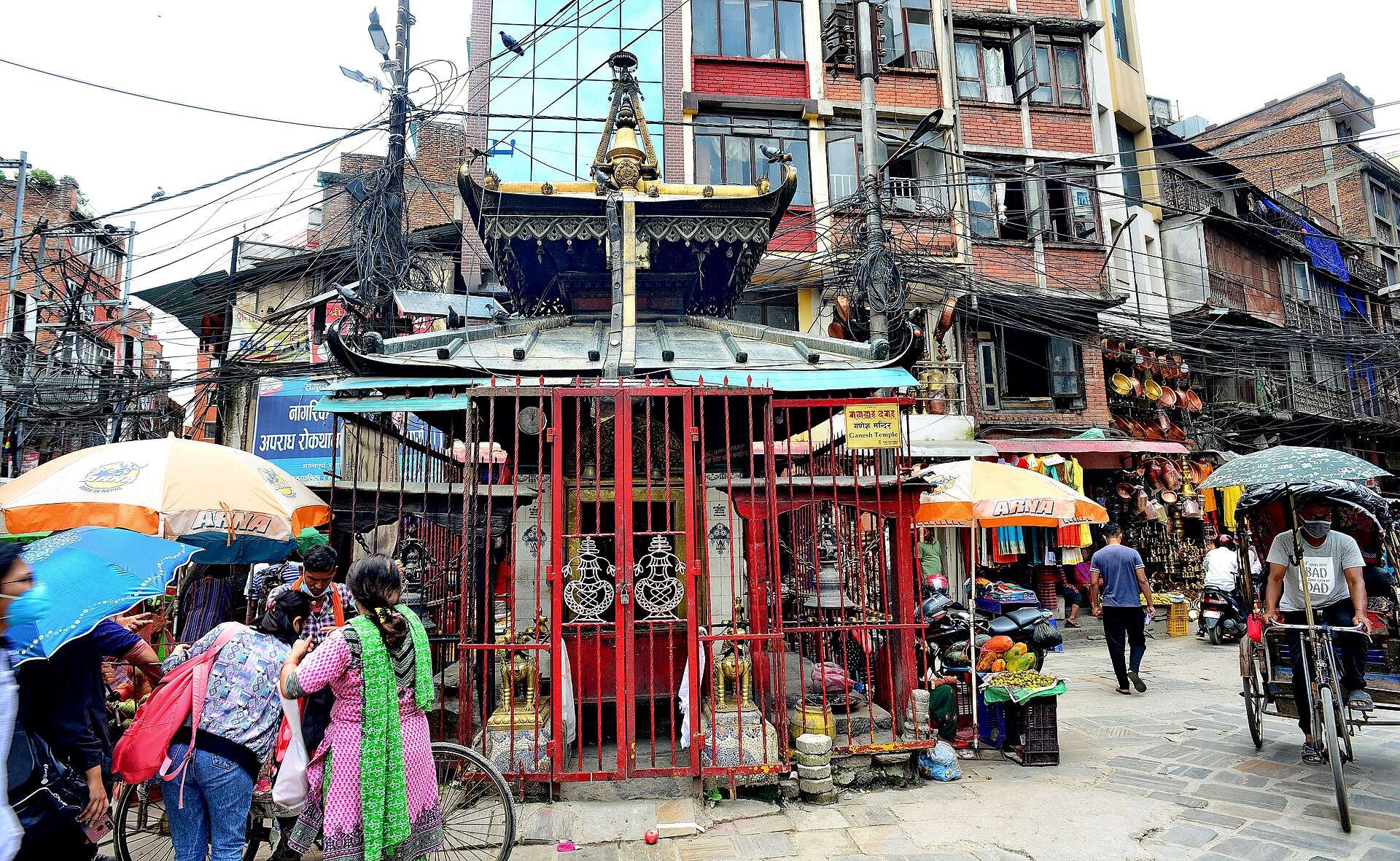
- Ganesh temple: On the north side of the square. Its tile roofs were replaced in 1928.
- Nyalon: The “fish stone”, a stone fish on a pedestal at the centre of the square.
- Narayan temple: A small temple on the north-west side.
- Yita Chapa: The long “southern pavilion”, with shrine rooms and a hymn hall where locals sing.
- Asan Dabu: A stone platform used for sacred dances during festivals. Shops cover it at other times.
- Buddhist courtyards: Takse Baha, Kwathu Baha, Haku Baha, Dhalasikwa Baha, Dagu Baha, Asan Baha and Hwakha Baha, around the edge of the square. Each has a shrine with an image of the Buddha.
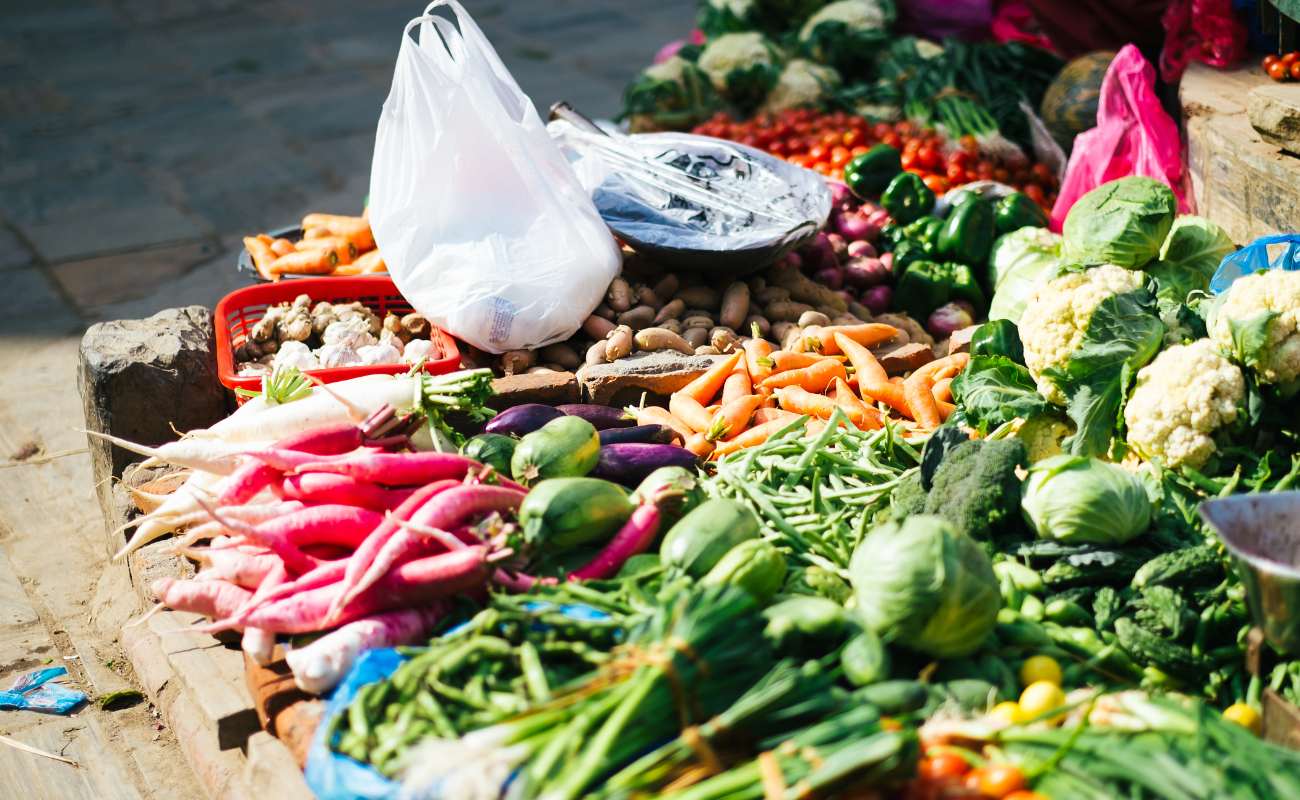
Most visitors come for the trade itself. Kathmandu.im describes sacks of dried chilli, turmeric, ginger and rice in the morning. Nepal Traveller, writing in April 2026, lists samosas, jalebi (syrupy fried sweets) and pani puri at Asan. We don’t name shops or stalls, because we found no reliable source for them.

Which festivals happen in Asan?
Asan hosts a run of processions, and Wikipedia gives only months, so check the dates each year.
| Festival | Month | What happens |
|---|---|---|
| Asan Chalan and Annapurna Jatra | October | The day after Vijaya Dashami (the main day of Dashain), the goddess’s palanquin is carried around town |
| Dyah Lwakegu | April | Three portable shrines come to the square, during Pahan Charhe |
| Jana Baha Dyah Jatra | April | The chariot of White Machhindranath halts overnight, and butter lamps light the square |
| Kumari Jatra | September | Three chariots pass through, as part of Indra Jatra |
What did the 2015 earthquake do to Asan?
The main market largely survived the 25 April 2015 earthquake, but the houses behind it did not all stand. Republica reported that shops were open again within about two weeks, and that people were amazed it was still standing.
Just beyond the market, official reports then counted 22 collapsed houses and 250 deemed dangerous, the paper said. A city engineer warned that standing buildings could still be unsafe, and a ward official said many houses had been built far above the legal height.
We found no later survey, and nothing on what has since been repaired. So we can’t say the area was rebuilt, or that it’s safe now.

When is the best time to visit Asan?
Early morning is when the wholesale trade is at its peak, according to kathmandu.im, which gives 6 am to 9 am. Note that this is a guide’s view, and that it’s also when the lanes are busy with porters.
Street life changes later in the day too. The Kathmandu Post reported in 2024 that vendors in Asan were selling in the evening, to avoid the city police. Festival days fill the square, as the table above shows.
What can go wrong in Asan?
Crowds and narrow lanes are the main problem. Kathmandu.im warns of motorbikes in the lanes, so keep your bag in front of you and watch where you stop.
- Vendor bans: The Kathmandu Post reported in 2017 that the city removed more than 150 vendors from Asan and nearby areas in two days. In 2024, it described a complete ban on street vending. So stalls may be missing, or may be gone quickly.
- Food safety: Follow the sensible habits in our guide to local food in Kathmandu.
- Theft: The UK Foreign Office warns of pickpockets and bag-snatchers in Kathmandu’s tourist areas. It doesn’t name Asan, but crowded lanes call for the same care.
- Rain: The UK Foreign Office says the monsoon normally runs from June to October.
How should you behave in Asan?
Remember that this is a working market and a place of worship at the same time. People stop to pray at the temple on their way through, according to Nepali Times, so don’t block them.
- Ask before you take photos of people, and don’t crowd worshippers.
- Watch what others do before you walk around a temple.
- Take off your shoes where that’s expected, and avoid shorts and sleeveless tops at temples, as the UK Foreign Office advises.
- Keep out of the way of porters and shopkeepers. They’re working.
How do you get to Asan on your own?
Walking from Thamel is the simplest way, taking about 15 minutes according to kathmandu.im. Wikipedia mentions two taxi stands and bus stops on the eastern side of the area.
Our Kathmandu taxi fare guide covers city prices. A 1994 book excerpted by Nepali Times described cars that could hardly move in the square. We found nothing newer, but expect to walk the last part.
What is near Asan?
Kathmandu Durbar Square is the natural next stop, at the other end of the old trade route. Read our Kathmandu Durbar Square guide first, as there’s a fee there.
Thamel is the other way, and our Thamel guide covers it.
Should you visit Asan with a guide or alone?
You can visit alone, as it’s free and easy to find. Allow 30 to 45 minutes, kathmandu.im suggests. The shrines are packed into a small space, so bring the list above. Our self-guided walking tour can connect it with the rest of the old city.
A guide helps most with food and with the small courtyards off the square. Our Kathmandu food tour walks here from Thamel, with tastings along the way.