What is Bungamati?
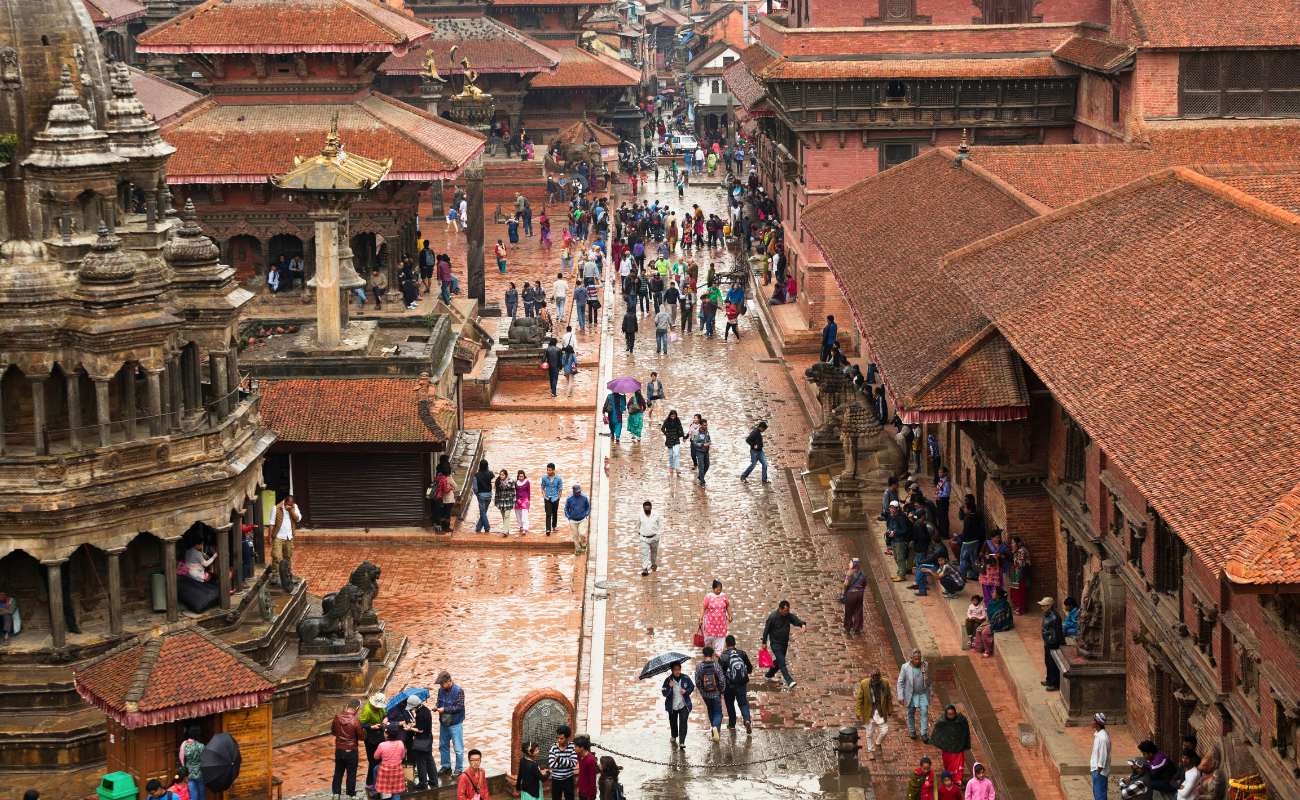
Bungamati is a Newar town on a spur of land above the Bagmati River, in Ward 22 of Lalitpur Metropolitan City. Newar people are the indigenous community of the Kathmandu Valley. The Kathmandu Post describes the town as predominantly Newar and as a longtime hub of Newar culture.
It’s best known as the home of Rato Machhindranath, a rain god worshipped by both Hindus and Buddhists. It’s also known for its woodcarvers. It’s a living town and not a monument zone, and it isn’t one of the seven UNESCO sites.
Where is Bungamati, and how far is it from Thamel?
Bungamati is about 6 km south of Lalitpur, according to The Kathmandu Post. Wikipedia gives 10 km from downtown Kathmandu.
By our own map measurement, it’s 9.6 km in a straight line from Thamel, and 5.4 km from Patan Durbar Square. The road is longer. The Longest Way Home gives 1 to 1.5 hours by bus from Kathmandu, while The Kathmandu Post called it a 30-minute bus ride in 2019. We found no reliable car time.

What is the history of Bungamati?
The oldest firm record is an inscription from 605 AD, according to The Longest Way Home. Wikipedia says it’s a stele of the Licchavi king Amshuverma, found here. Wikipedia also gives the town’s old names: Bugayumigrama under the Licchavis, Bungapattan under the Mallas, and also Amarapur.
Its founding is told as a legend. The Longest Way Home retells one version: after a 12-year drought, a priest brought Machhindranath from Assam to the valley, and rain followed. The town grew around his temple. Wikipedia says the settlement moved here from uphill once the temple was built.
Sources disagree on the temple’s age. The Kathmandu Post says 16th century, while The Longest Way Home says it’s rumoured to be 17th century. The Himalayan Times said in 2016 that it dates from the Licchavi period, in the 4th century.
Who is Rato Machhindranath?
Rato Machhindranath is the god of rain and patron of the town, known locally as Bungadeya. Wikipedia says Hindus regard him as an incarnation of Shiva, and Buddhists as a form of Avalokiteshvara. It also says that to Bungamati’s Newar people he’s a local rain god with old ties to water.
The idol lives in two places. It spends about half of each year in Patan, and Onlinekhabar says it’s carried there a few days before Yomari Punhi and returned after the Bhoto Jatra ceremony. The chariot procession that moves him is one of the valley’s most important festivals, according to Wikipedia. It moves through Patan’s streets for about a month, so check your date.

What did the 2015 earthquake do to Bungamati?
The earthquake of 25 April 2015 reduced much of the town to rubble, according to The Kathmandu Post. Sources disagree on the death toll: at least seven (Nepali Times, 2025), 27 (The Kathmandu Post, 2019) and around 30 (an undated Buddha Air blog).
The Post said in 2019 that almost two-thirds of homes were severely damaged. In 2016, it counted 851 of 1,351 houses destroyed and 315 partly damaged. The government launched its national house rebuilding campaign here in 2016.
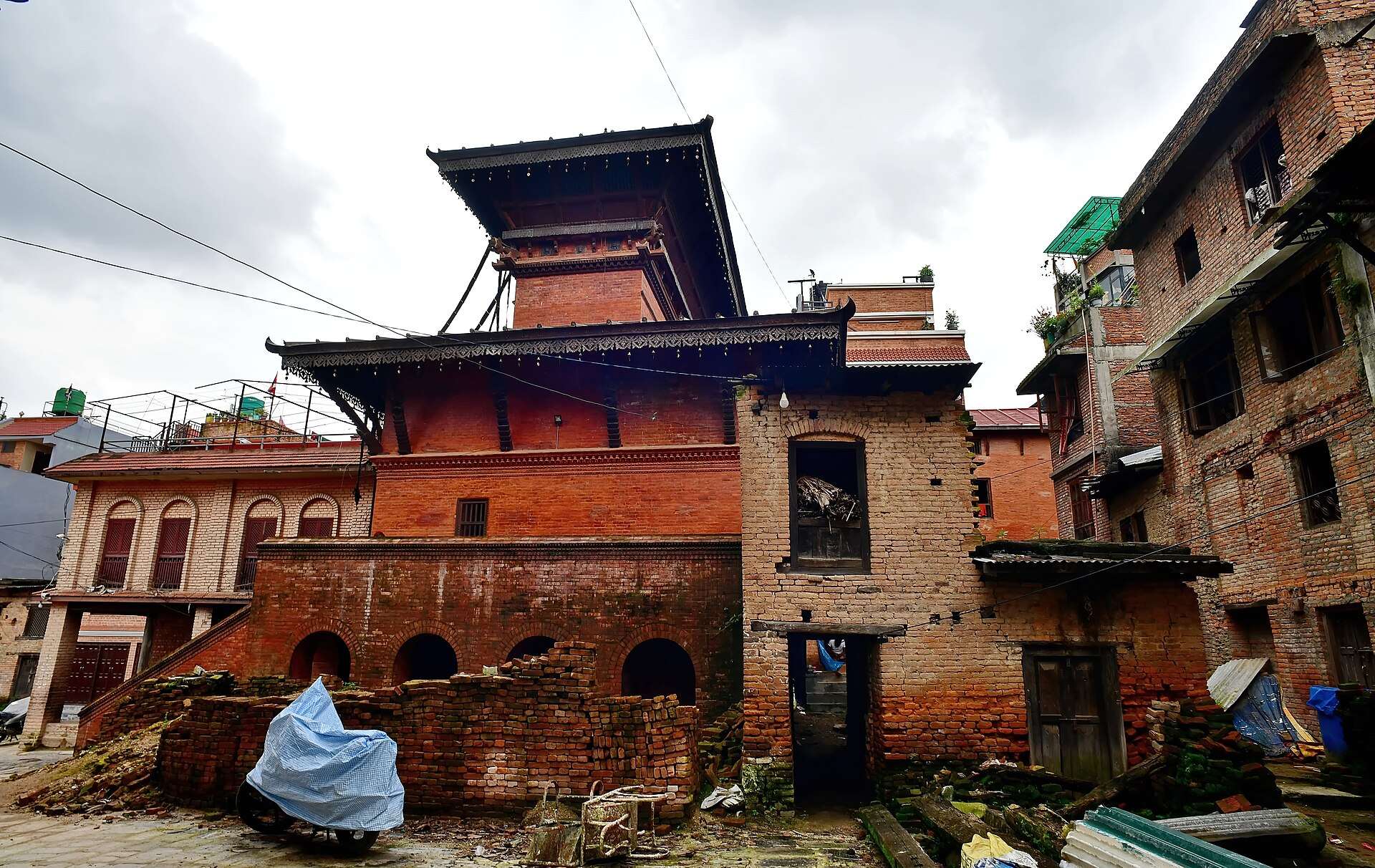
The Hayagriva Bhairab Temple collapsed completely and was restored by 2023, according to The Longest Way Home. Houses and shops came back more quickly than the main temple. Most families told Nepali Times in 2025 that they never got any help and rebuilt on their own. The European Union and UN-Habitat helped restore De Pukhu pond, the Post reported in 2019.
Nationally, 825 of 920 damaged monuments had been rebuilt by August 2026, according to the Department of Archaeology. That doesn’t tell you the state of any one building here.
Why did rebuilding the Rato Machhindranath temple take so long?
The temple took about a decade because of disputes over money, materials and who was in charge. People involved blame each other, so we show who said what.
| Date | What was reported | Source |
|---|---|---|
| 2016 | Contract goes to three companies, with Sri Lankan funds, Rs 47.4 million and a two-year deadline | The Kathmandu Post |
| 2019 | Work has stopped for three months over a money dispute. An engineer puts it at about 30% complete | The Kathmandu Post |
| 2019 | Residents object to lime mortar in place of mud mortar, and to ordinary bricks in place of large traditional ones | The Kathmandu Post |
| February 2020 | Sri Lanka’s funding ends. Its embassy rejects the word “withdrawal” and says Nepal didn’t reply in time. A Nepali official says the time allowed was too short | Onlinekhabar |
| 29 June 2020 | A local consumer committee takes over the work | The Rising Nepal |
| 19 September 2023 | Work stops for lack of budget, at about 80% complete, the committee says | The Rising Nepal |
| February 2024 | Lalitpur Metropolitan City sets aside Rs 10 million to finish it | The Rising Nepal |
| 22 May 2025 | The pinnacle is installed | The Rising Nepal |
| 1 June 2025 | The deity returns inside, as the work reaches its “final stage” | The Diplomat Nepal |
| January 2026 | A paper for a Bhaktapur earthquake conference says the reconstruction was completed after ten years | Journal of Science and Engineering |
The argument about authenticity hasn’t ended. The committee’s chair said in 2025 that it used traditional bricks in about 50 sizes. In August 2026, heritage researcher Prof. Sudarshan Raj Tiwari told The Rising Nepal that the temple’s original foundation materials were replaced with new ones.
The current state isn’t clear either. The January 2026 paper calls the work completed. In October 2026, The Longest Way Home described the temple as restored in one place, and as not complete but likely to finish by the end of 2026 in another. We found no official statement that it’s finished.
What is there to see in Bungamati?
The square, its temples and the working lanes around it are what you come for. Details below come mainly from The Longest Way Home, as of October 2026.
- Rato Machhindranath Temple: A tall shikhara-style temple (a tower with a curved top) in the middle of the square.
- Hayagriva Bhairab Temple: Up steps behind the main temple. It holds a gold statue, and the guide says it’s kept behind a door guarded by soldiers.
- Karya Binayak Temple: A Ganesh temple on a hill outside town, with valley views on a fine day. Its fence is hung with small brass bells, and devotees gather there on most Saturdays.
- Woodcarving shops: Along the streets, and you may see carvers at work. A small woodcarving museum behind the Ganesh shrine isn’t always open.
- De Pukhu pond and stone water spouts: Still used by local people.
- Amarapur Buddhist Learning Center: Open to visitors, with very basic facilities.
Bungamati also has its own Kumari, or living goddess, according to Wikipedia. The Longest Way Home says she’s a local girl who often attends school. Please don’t go looking for her or photograph her.
When is the best time to visit Bungamati?
We found no official advice on the best time. The UK Foreign Office says the monsoon normally runs from June to October, so lanes and roads are easier outside those months.
Festival days change the visit a lot. The month-long Rato Machhindranath chariot procession runs through Patan, according to Wikipedia, so expect crowds and blocked roads there. The Rising Nepal says a crowd also marches when the idol comes back to Bungamati. Check the date before you go.
What can go wrong in Bungamati?
Unfinished rebuilding is the main thing to expect. The Longest Way Home warns of scaffolding, bricks and tarpaulins in the square. It says many buildings behind the square remain cracked, and to take care walking close to them.
- Getting back: The same guide says there’s little chance of finding a taxi for the return, so consider having yours wait.
- Food: There are no tourist restaurants, so bring snacks.
- Concrete: A resident told Nepali Times in 2025 that almost everyone now has a concrete house, after the old mud-brick homes fell. Don’t expect an untouched medieval village.
- The Fast Track road: Residents have protested against the Kathmandu-Tarai expressway since at least 2018, because of land and festival grounds on its route. In May 2026, The Kathmandu Post said the government still hadn’t decided on moving the toll plaza from Khokana to Pharsidol, in Bungamati. This is about people’s land and festivals, so keep clear of any protest and ask about the road. Our Khokana guide explains more.
How should you behave in Bungamati?
Remember that this is a place of worship and a town still recovering. Almost two-thirds of homes were severely damaged in 2015, so be thoughtful if the subject comes up.
The UK Foreign Office advises avoiding shorts and sleeveless tops in holy places, and taking off your shoes where that’s expected. Ask before you photograph people, priests or rituals. Our guide on what to wear in Kathmandu has more.
How do you get to Bungamati on your own?
A taxi is the simplest way. These figures come from The Longest Way Home, as of October 2026, so check them.
- Taxi from Thamel: NPR 1,000 to 1,200.
- Taxi from Patan: About NPR 600.
- Bus from Ratna Park, Kathmandu: NPR 50 and 1 to 1.5 hours.
- Bus from Patan: NPR 30 and about 40 minutes.
What is near Bungamati?
Khokana is the obvious pairing, and Holy Mountain Treks gives 20 to 30 minutes on foot between them. Read our Khokana guide too.
Patan is the other natural stop, and our Patan Durbar Square guide covers its royal square. The idol’s other home is in Patan’s Ta Baha area.
Should you visit Bungamati with a guide or alone?
You can visit alone, and the square and temples are free according to The Longest Way Home. Allow half a day if you include Karya Binayak, the same guide says.
A guide helps with the story, because the temple’s history and current state are hard to piece together alone. Our Patan day tour stops here on its way to Khokana.